WNBA Star Drops Race Bomb After Ejection — League Faces Impossible Choice
Liberty Check
- Sky guard DiJonai Carrington accused Indiana Fever of ‘white privilege’ immediately after being ejected for hitting white opponent in the face
- WNBA now stuck between suspending a player for race-based accusation or doing nothing and proving double standards exist
- League spent years politicizing sports — now can’t ignore when politics target their own players based on skin color
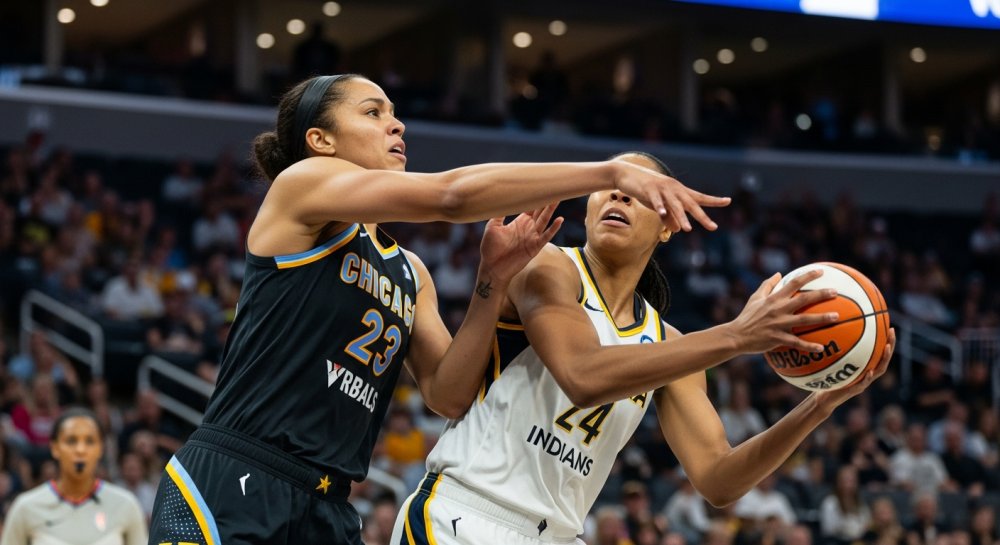
Chicago Sky guard DiJonai Carrington was ejected for a Flagrant 2 foul on Indiana Fever guard Sophie Cunningham on Saturday afternoon. Then she apparently went straight to the locker room and fired off an accusation that should force the WNBA to finally enforce its own standards.
A post on Carrington’s Threads account shortly after her ejection read: “WHITE PRIVILEGE @indianafever.”
Let that sink in. Following an ejection for striking a white player across the head hard enough to make her mouth bleed, Carrington publicly accused either the referees or the Fever organization of racism. It’s hard to imagine that happening in any other major professional sports league without immediate and severe consequences.
The Fever won 90-86, but the real story became what happened after Carrington left the court.
Carrington was tossed late in the first quarter after striking Cunningham across the head while the Fever guard attempted a layup. Officials reviewed the play and upgraded the foul to a Flagrant 2, which carries an automatic ejection. Cunningham had to be restrained following the play and appeared to show her teammates that her mouth was bleeding.
The timing of Carrington’s post made her message crystal clear — she believes race played a role in the officiating decision. While she didn’t specifically write “the referees are racist,” there’s no reasonable alternative interpretation. Unless she thinks the Indiana Fever organization itself is racist, which would be equally problematic.
Either way, the WNBA finds itself trapped by its own politics.
The league now has two terrible options: impose a harsh punishment on Carrington, which will anger progressive players and media allies, or do nothing and prove that racial double standards exist despite Commissioner Cathy Engelbert recently telling Congress that the league applies its rules consistently across all players.
OutKick contacted the WNBA, the WNBA Players’ Association, and the Chicago Sky for comment. The league was asked whether it interpreted the message as an allegation of racial bias, whether it had spoken with Carrington, and whether discipline was being considered. The Sky were asked what Carrington meant and whether the organization stood by her characterization.
The WNBPA was asked whether the union believes racial bias played a role in the ejection, whether it has evidence of racial disparities in officiating, and whether it stands by Carrington’s accusation.
None of the organizations responded.
Complaints about officiating are normal in professional sports. Players think they get fouled too much, coaches think opponents get favorable treatment, and fans are convinced referees are incompetent. But claiming “white privilege” immediately after an officiating decision crosses a line. It alleges that officials aren’t making basketball calls based on the play, but based on the skin color of the players involved.
If that’s what Carrington believes, she should say it clearly and provide evidence. If that’s not what she meant, she should clarify immediately.
There’s also critical context that makes this situation even more volatile.
Sophie Cunningham has become one of the WNBA’s most polarizing players after publicly stating that she doesn’t believe biological men should compete in women’s sports. Her position has generated rallies at Fever games, counter-protests, and open disagreement from others inside the WNBA, including the players’ association.
So it’s entirely possible Carrington’s message was aimed at something broader than the officiating. That’s why clarification matters — and why the silence from the league, union, and team is so damning.
The WNBA spent years embracing players speaking publicly about politics, race, gender, and social issues. The league can’t now treat a player’s “WHITE PRIVILEGE” accusation as something that doesn’t deserve consequences. You don’t get to politicize everything and then ignore racial accusations when they become inconvenient.
The WNBPA has a problem too. On Friday, the union said “hate, abuse, and demonization of any person or group of people, including transgender people” fuels “fear, division, and harm.”
If “any person or group” actually means what it says, then the union can’t carve out an exception when one of its own players invokes “WHITE PRIVILEGE” against another team. Either the standard applies to everyone or it applies to no one.
Carrington didn’t just post her accusation publicly — she did it during a game, presumably from inside a WNBA locker room, and tagged another WNBA franchise. The league, the players’ association, and the Sky were given an opportunity to explain what she meant or say whether they even asked her.
They haven’t.
For now, Carrington’s two-word race-based accusation is left to speak for itself. And the WNBA’s silence speaks volumes about whether its rules really apply to everyone.
Americans deserve better.