Husband’s Chilling Testimony Reveals What Doctors Missed Before Tragedy
Liberty Check
- Patrick Clancy testified his ex-wife was prescribed 13 psychiatric medications in the months before their children’s deaths, raising serious questions about telehealth oversight
- Defense admits Lindsay Clancy killed her three children but argues severe postpartum psychosis eliminated criminal responsibility
- Legal experts warn the case highlights dangerous gaps in mental health treatment and the limits of remote psychiatric care
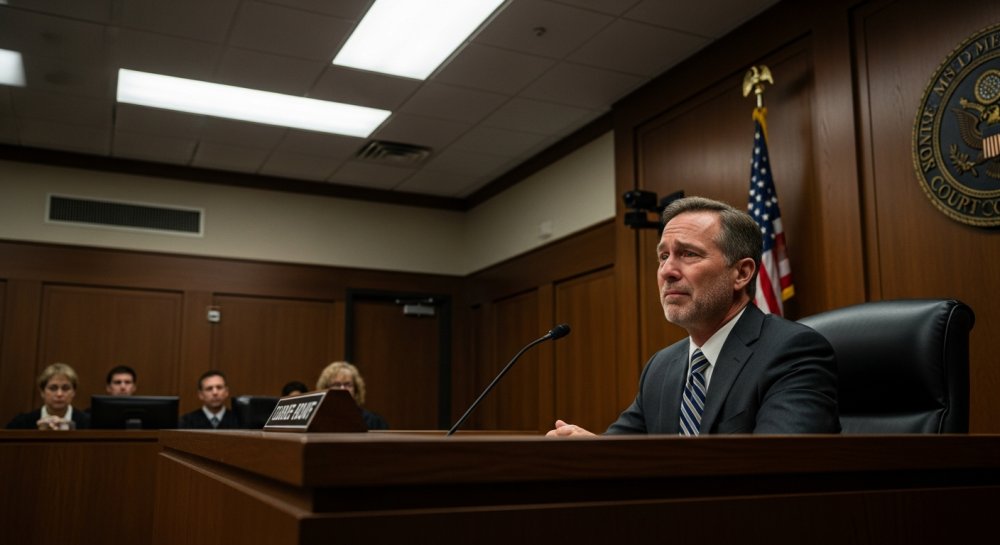
Patrick Clancy took the witness stand Monday in a Massachusetts courtroom, offering jurors a devastating account of the mental health crisis he witnessed before losing his three young children. He was the first witness called in the murder trial of his ex-wife, Lindsay Clancy, who faces charges in the January 2023 deaths of Cora, 5, Dawson, 3, and Callan, 8 months.
The father described watching Lindsay fall into a “big spiral” after she began taking Seroquel, testifying that she lost weight, became severely depressed and began expressing suicidal thoughts.
“Awful,” he said when asked how Lindsay was doing physically after starting the medication.
“That was really where her big spiral started. She started to lose a lot of weight, and she became very depressed, and she was having a really hard time.”
Patrick testified that Lindsay told him she was experiencing intrusive thoughts about harming their children, although she denied having a plan and said the thoughts disturbed her. Despite these alarming admissions, he told jurors he was not initially concerned for the children’s safety.
“I never saw Lindsay harm the kids,” he said.
Margaret McLean, a former criminal prosecutor and trial attorney who teaches law at Boston College’s Carroll School of Management, said Patrick’s measured delivery did little to conceal the anguish of a father being forced to retrace the months preceding his children’s deaths.
“I think his demeanor on the stand is really quite clinical. He’s telling it as it is,” McLean told Fox News Digital.
“You can see the anguish within this man’s eyes, his facial expressions. You can tell he’s anguished up there, and it’s a horrible thing to have to relive and talk about.”
Patrick testified that he became alarmed after Lindsay was prescribed 13 psychiatric medications in the months prior to the murders. He pushed for an in-person appointment because he believed there was a “disconnect” between the seriousness of her condition and the brief telehealth sessions she was receiving.
“It seemed like most of her telehealth appointments were pretty quick, and there just wasn’t, like, a lot of attention,” he said.
The testimony raises serious questions about the adequacy of remote psychiatric care, especially for patients exhibiting severe symptoms. Patrick also described taking Lindsay to hospital emergency departments and helping her enter McLean Hospital after she continued expressing suicidal thoughts.
He testified that he “would have paid anything” if insurance had become an obstacle to keeping her hospitalized.
McLean said the testimony could leave jurors asking whether the warning prompted an adequate response, while cautioning against placing blame on Patrick or family members who may not have understood the severity of the risk.
“So many people don’t understand mental health today, so I’m not blaming him at all,” McLean said.
“Anybody might have done what he did, but that’s the part that scared me.”
Patrick’s testimony followed starkly different opening statements from prosecutors and the defense. Assistant District Attorney Shanan Buckingham told jurors that the three children were “deliberately and meticulously killed” by their mother on Jan. 24, 2023.
Buckingham alleged that Clancy deliberately sent Patrick from their Duxbury home to pick up medication and takeout food, giving herself enough time to strangle each child with an exercise band before attempting to kill herself.
McLean said Buckingham gave jurors a “roadmap of cold, calculated intent” while humanizing each child’s interests and focusing on the time and physical effort required to carry out three separate strangulations.
“The prosecution did that because she [Buckingham] wants the jury to remember that the act of strangulation takes time and physical effort,” McLean said.
“It requires a conscious choice to continue three separate times.”
The Commonwealth’s strategy is to reject the defense’s bid that Clancy suffered a sudden psychotic break and instead portray her as organized, purposeful and controlled.
During opening statements, defense attorney Kevin Reddington conceded that Clancy killed the children but argued that the only meaningful dispute is what was happening inside her mind.
“She knows that she killed these children,” Reddington told jurors.
“The issue for consideration is what was going on in that woman’s mind.”
McLean described the concession as a calculated move by a veteran trial attorney.
“By doing that, he is attempting to strip the prosecution of their shock value and force the jury to look purely at Lindsay Clancy’s mental capacity,” she said.
Reddington argued that Clancy had no motive to kill children she had loved and nurtured. He also displayed graphic hospital photographs showing Clancy with injuries to her neck and wrists.
McLean said the defense was framing Clancy’s paralysis “not as a consequence of a crime, but as the tragic final symptom of a complete postpartum psychotic break.”
Clancy, a former labor and delivery nurse at Massachusetts General Hospital, has pleaded not guilty to three counts each of murder and strangulation. Her attorneys do not dispute that she killed the children but argue that she lacked criminal responsibility because of severe postpartum psychosis.
Judge William Sullivan told jurors that the Commonwealth must prove beyond a reasonable doubt that Clancy was criminally responsible when the children were killed.
“It’s going to be black and white for some people, gray area for other people,” McLean said.
“It is going to be one of the hardest things that this jury, or any jury, will ever have to decide.”
Our freedoms depend on staying vigilant.