Inside NATO’s Easternmost City: Russia’s Shadow Power Play EXPOSED
Liberty Check
- Russia is deploying a sophisticated soft power campaign in Estonia’s border city of Narva, where ethnic Russians comprise 97% of the population — a potential trigger point for future aggression.
- The Kremlin is weaponizing cultural influence, language politics, and propaganda networks to destabilize NATO’s easternmost territory while testing alliance resolve.
- Estonian officials warn that Moscow’s playbook mirrors tactics used before the 2014 Crimea annexation — making this a critical test for American leadership in defending NATO’s border.
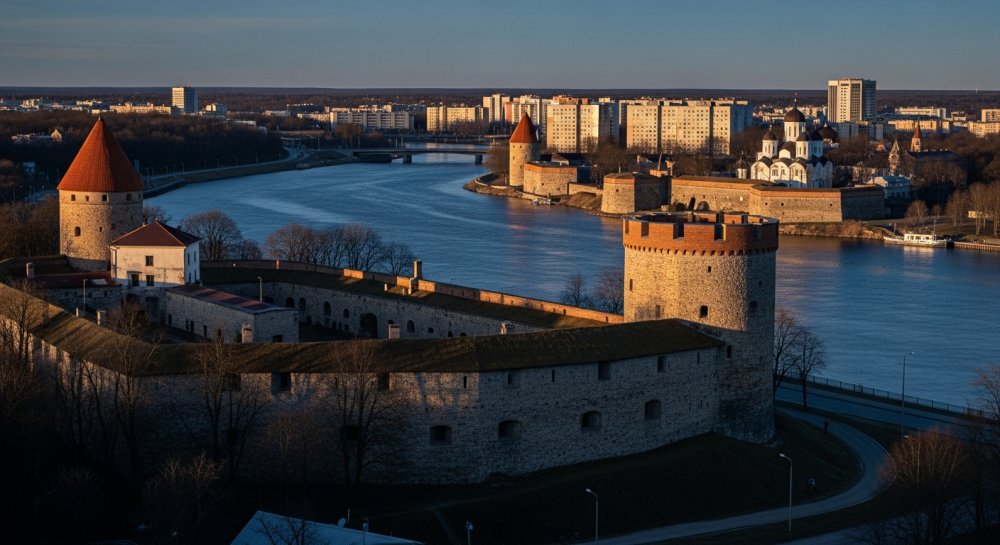
Deep in Estonia’s easternmost corner, a quiet battle for hearts and minds is unfolating — one that could determine whether NATO’s frontline holds against Russian expansionism. The city of Narva, where 97% of residents are ethnic Russians, has become ground zero for Moscow’s latest soft power offensive, raising urgent questions about the strength of Western alliances in the face of Kremlin manipulation.
Situated directly on the Russian border, Narva represents both a strategic asset and a vulnerability. The city’s overwhelmingly Russian-speaking population has made it an irresistible target for Moscow’s information warfare apparatus, which has spent years cultivating cultural and linguistic ties designed to undermine Estonian sovereignty.
🇷🇺 At the Russian-Estonian border with @DailyCaller, just days after a major Kremlin propaganda effort.
I’m standing on the bridge literally named “Friendship” between the two nations. As tensions rise, a local told me: “Friendship has been paused.” pic.twitter.com/QE1dOwXno6
— Derek VanBuskirk (@DerekVBK) May 14, 2026
The tactics are sophisticated and deliberate. Russian state media floods local airwaves with programming that portrays Estonia as hostile to Russian culture while positioning Moscow as the defender of ethnic Russian rights. Language politics have become a flashpoint, with the Kremlin exploiting tensions over Estonia’s efforts to strengthen the use of Estonian in public life.
Estonian security officials privately acknowledge the challenge: how to integrate a population with deep cultural and linguistic ties to an adversarial power without triggering the very grievances Moscow seeks to exploit. It’s a delicate balance that Vladimir Putin’s regime has shown zero interest in respecting.
The historical parallels are chilling. Before seizing Crimea in 2014, Russia spent years building soft power networks, spreading propaganda about Ukrainian hostility toward Russian speakers, and creating the pretext for “protecting” ethnic Russians abroad. The infamous declaration that “Russia’s borders do not end anywhere” — attributed to various Russian officials over the years — encapsulates Moscow’s refusal to accept the sovereignty of its neighbors.
NATO membership has provided Estonia with security guarantees that Ukraine lacked, but those guarantees depend on American credibility and resolve. Any perception of weakness or wavering commitment invites testing by adversaries who view NATO’s Article 5 mutual defense pledge as untested in the modern era.
The Biden administration’s chaotic foreign policy record — from the Afghanistan withdrawal debacle to inconsistent messaging on Ukraine — has done little to reassure frontline NATO allies. Eastern European members increasingly question whether Washington would truly risk conflict with nuclear-armed Russia over what many Americans couldn’t find on a map.
Conservative foreign policy experts have long warned that soft power operations are often the prelude to hard power moves. By the time Russian tanks roll, Moscow has already spent years preparing the information space, cultivating local sympathizers, and creating plausible deniability for aggression framed as “protecting” ethnic Russians.
Estonia’s government has responded by strengthening citizenship requirements, promoting the Estonian language, and working to counter Russian propaganda with factual information about life in a free, democratic society. These efforts face an uphill battle against well-funded Russian media operations and the simple reality that many Narva residents consume Russian news exclusively.
The situation also highlights the broader challenge facing NATO: how to defend territories where significant portions of the population may feel greater affinity with an adversary than with their own government. This isn’t about legitimizing Russian aggression — it’s about acknowledging a vulnerability that Moscow has proven adept at exploiting.
American leadership remains essential to deterring Russian adventurism. That means maintaining a robust military presence in Eastern Europe, providing consistent support to frontline allies, and making clear that NATO’s collective defense commitment is ironclad. Weakness invites aggression; strength preserves peace.
The Narva situation also underscores why immigration and cultural cohesion matter to national security. Countries with large, unassimilated populations that identify primarily with foreign powers face inherent vulnerabilities that adversaries will ruthlessly exploit. It’s a lesson relevant far beyond Estonia’s borders.
As Russia continues its soft power campaign in NATO’s easternmost city, the stakes extend beyond one Baltic nation. Moscow is testing whether the West still has the will to defend its values and its allies — or whether years of cultural decline and political division have left us vulnerable to patient, persistent adversaries.
Our freedoms depend on staying vigilant.

Jerry C.
May 28, 2026 at 7:05 pm
One of the reasons all the former Soviet states should’ve kicked-out the Russian colonizers as soon as they gained their independence…