Crime
CRASH Bombshell: Killer’s Appeal Just Got Crushed at Highest Level
Liberty Check
- Ohio’s highest court rejected convicted killer Mackenzie Shirilla’s latest appeal attempt, leaving her 15-years-to-life sentence intact
- Shirilla was convicted of deliberately crashing her car into a brick building, killing her boyfriend and a friend in what prosecutors called a murder disguised as an accident
- Her legal team missed a critical filing deadline by one day, and the court refused to bend the rules despite renewed media attention from a Netflix series
Mackenzie Shirilla’s desperate bid to overturn her murder conviction just hit a brick wall at Ohio’s Supreme Court. The 21-year-old killer, serving two concurrent sentences of 15 years to life for a deadly 2022 crash, saw her latest appeal tossed after the state’s highest court declined to intervene.
In a June 23 entry, Chief Justice Sharon L. Kennedy and the court rejected Shirilla’s jurisdictional filings, upholding a lower-court ruling that dismissed her postconviction petition because it arrived one day past the legal deadline. One day too late, and justice prevailed.
Shirilla was convicted of deliberately slamming her Toyota Camry into a brick building in Strongsville, Ohio, on July 31, 2022. The horrific crash killed her boyfriend, Dominic Russo, 20, and their friend, Davion Flanagan, 19. Prosecutors argued convincingly that Shirilla engineered the crash to end her toxic relationship with Russo, with Flanagan an unintended casualty trapped in the vehicle.
A bench trial found her guilty on four counts of murder, four counts of felonious assault, and two counts of aggravated vehicular homicide. The evidence was clear: this wasn’t an accident.
“Without question, Mackenzie Shirilla is guilty of murder,” said Cuyahoga County Prosecutor Michael O’Malley’s office in a May statement.
Shirilla’s case returned to public attention after Netflix released “The Crash,” a docuseries examining the deadly incident. Following the show’s release, her lawyers filed an appeal claiming her trial attorneys failed to properly investigate Postural Orthostatic Tachycardia Syndrome, or POTS—a medical condition they say could have caused her to lose consciousness before the crash.
Her defense team argued that POTS was only “cursorily referenced” at trial, despite Shirilla and her family allegedly alerting her attorneys to the condition. They claimed trial counsel should have pursued expert testimony about whether POTS could explain her failure to brake before impact.
But the appeals court wasn’t buying it. Her convictions had already been upheld on direct appeal in 2024, and the new petition missed a critical statutory deadline.
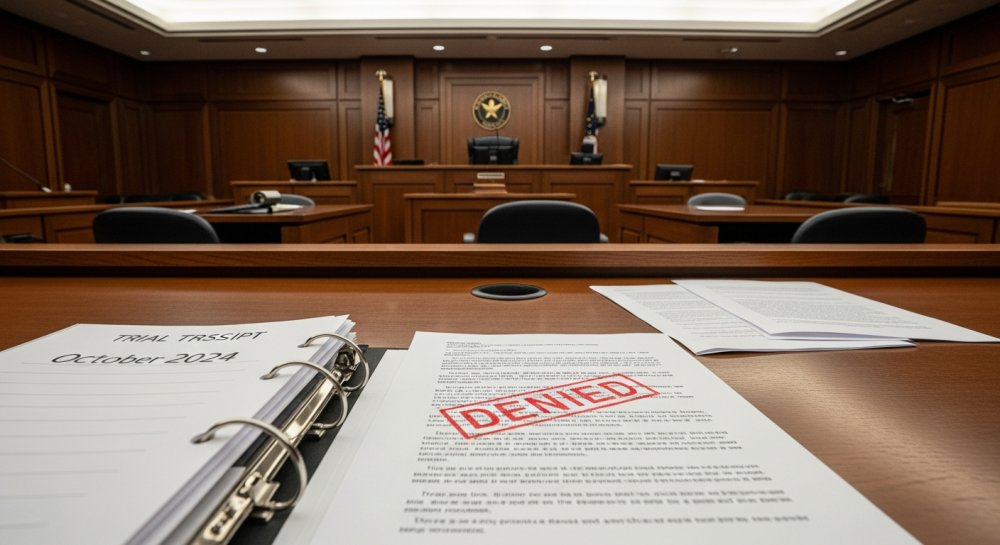
Under Ohio law, a postconviction petition must be filed within 365 days after the trial transcript is filed with the court of appeals. The relevant transcript was filed October 24, 2023, making the deadline October 23, 2024. Shirilla’s team filed on October 24, 2024—the 366th day.
Her lawyers argued the clock should have started later, when juvenile bindover transcripts were filed, and pointed to 2024 being a leap year. The appellate court rejected both arguments outright.
The court ruled the statute clearly refers to the “trial transcript,” not supplemental juvenile-hearing transcripts. And while 2024 was indeed a leap year, the law specifies 365 days, not a calendar year. The deadline is jurisdictional, meaning the court lacks authority to excuse late filings except under narrow statutory exceptions—none of which Shirilla met.
The court also refused to excuse the late filing on fairness grounds. Rules are rules, and deadlines matter—especially when two young lives were deliberately extinguished.
Shirilla has maintained the crash was not intentional, but prosecutors presented compelling evidence at trial showing otherwise. She continues to serve her sentence, and her legal options are rapidly running out.
The Constitution must be defended.