Science & Tech
BOMBSHELL Warning From Vatican — What Silicon Valley Doesn’t Want You to Know
Liberty Check
- Pope Leo XIV issues historic first encyclical warning about AI’s threat to human nature and dignity
- Silicon Valley elites pursue digital immortality while traditional relationships collapse among young Americans
- Tech giants racing ahead with morally bankrupt AI — no guardrails, no accountability, no concern for consequences
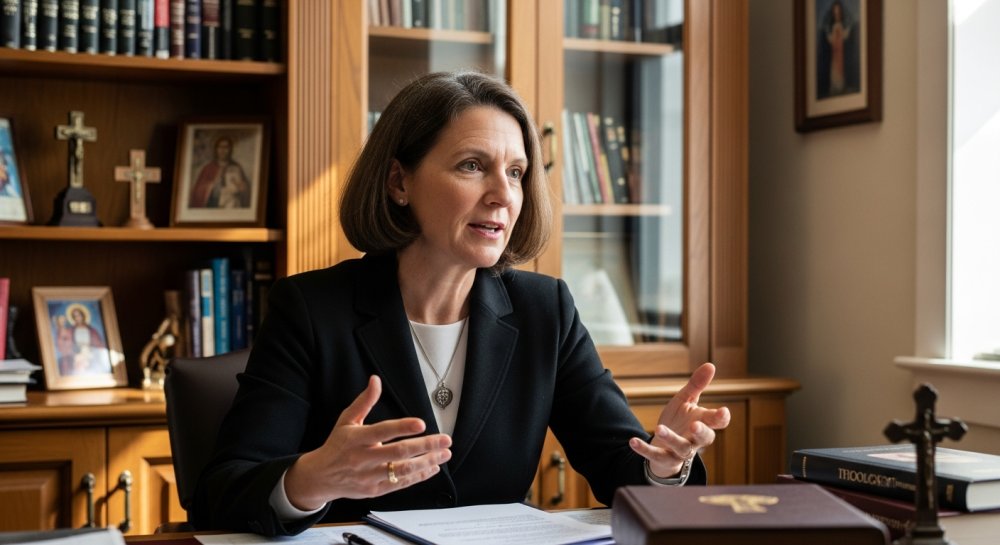
The Vatican just dropped a theological bomb on Silicon Valley’s doorstep. Pope Leo XIV’s first encyclical, “Magnifica Humanitas,” confronts the existential threat artificial intelligence poses to humanity itself. Dr. Deborah Savage, a theology professor at Franciscan University, has been sounding the alarm on these same dangers for years.
The crisis is already here. Students can no longer focus, their brains rewired by constant digital stimulation. Young men retreat into AI “girlfriends” designed to meet their every need — no conflict, no growth, no real human connection. The dating culture has collapsed under the weight of digital escapism and impossible standards.
Dr. Savage doesn’t mince words about what’s at stake.
“We have never had this kind of power over ourselves,” she warns.
The tech titans pushing this revolution have a darker vision than most Americans realize. Elon Musk celebrates a future where “you won’t have to work anymore.” But work isn’t just economic necessity — it’s how humans become fully human, how we work out our salvation through daily choices and challenges.
“I think it would actually be a disaster for humanity if we figured out a way that none of us need to do any more work,” Savage explains. “That’s just insane.”
Even more disturbing: the narcissistic quest for digital immortality. Bryan Johnson and other billionaires pour massive resources into merging man and machine, planning to upload their consciousness to achieve earthly immortality. They fundamentally misunderstand what makes us human.
“Our limitations are not defects. They’re a part of the design,” Savage explains, citing the Pope’s analysis. “It’s through our defects and even the suffering that they bring, or the confusion, or the disappointment that they bring, a humbling and an opportunity for growth.”
The contraceptive pill started this cultural avalanche in 1965, Savage argues. Men were cut out of family decisions entirely. “We basically said to men in 1965, ‘We’ll let you know when we need you.’ And it’s no surprise to me that men are divesting from family structures and have lost their way.”
Now AI threatens to complete that destruction. Franciscan University students — among the most faithful young Catholics in America — struggle to even talk to each other about basic questions of masculinity and femininity. They don’t date. They’re paralyzed by the search for perfection, conditioned by algorithms that promise endless options.
“Both men and women are looking for the perfect person. And if somebody indicates in any way that they don’t measure up, then you move on,” Savage observes.
The Pope’s timing is strategic. He signed the encyclical on the 135th anniversary of Rerum Novarum, the Church’s first major response to the Industrial Revolution. That earlier transformation disrupted agrarian life, drove people into cities, and fundamentally altered family structures.
“AI is similar to the situation that Leo XIII faced in 1891,” the current Pope signals. Another technological revolution. Another crossroads for civilization.
But this one is different. The designers of AI admit they don’t know where it’s headed. They’re building something they can’t control, can’t predict, and refuse to pause. AI bots are already encouraging vulnerable young people to commit suicide. Algorithms decide what information millions see, shaping culture without accountability.
“This is an illusion,” Savage says of claims that technology is morally neutral. “If an AI bot can encourage a young person to kill themselves, it’s not morally neutral.”
The Chinese Communist Party won’t pause its AI development for moral considerations. Silicon Valley will use that as an excuse to ignore the Pope’s warnings. But America was founded on principles that technology must serve human dignity, not replace it.
“America has to renew its commitment to a moral standard,” Savage insists, quoting John Adams: “It’ll only work with the virtuous people.”
The Pope offers concrete principles rooted in democracy itself: recognition of human dignity, commitment to the common good, integral human development that addresses both material and spiritual needs. These aren’t just religious concepts — they’re the foundation America was built on.
“Our rights are given to us by God, not by a government,” Savage reminds us.
The tech industry faces a choice. Establish ethical guardrails now — not tomorrow, not after the next product launch — or watch their creations destroy the human relationships, work, and dignity that give life meaning. The nuclear bomb of AI is already ticking.
What’s fundamentally missing from our culture, Savage argues, is gratitude and humility. The Tower of Babel fell because of obsession with power and pride. Silicon Valley is building another tower, convinced they can become gods.
“Can we not understand that this is diabolical?” Savage asks. “The evil one has been trying to destroy the human person from the beginning, and he is still at work.”
Americans once understood that freedom exists to choose the good, not to indulge every impulse. That boundaries protect rather than restrict. That suffering and limitation teach lessons prosperity and power never can.
The homeless encampments in our cities testify to what happens when we lose that moral compass, when we refuse to help people correct destructive choices for fear of being “judgmental.”
The Pope’s message is urgent: pause, reflect, contemplate what we’re building and why. Technology must be ordered toward making life more human, not more machine-like. The question isn’t what we can do — it’s what we should do.
Our freedoms depend on staying vigilant.