National Security
Military Deploys LETHAL New Weapon at Border—Cartels Never Saw This Coming
Liberty Check
- U.S. military successfully deployed advanced laser technology to neutralize cartel surveillance drones at the southern border
- Border security forces are using cutting-edge defensive systems to protect American sovereignty against hostile foreign operations
- The deployment signals a major escalation in America’s response to cartel operations threatening national security
The U.S. military has taken border security to a new level, deploying advanced laser weapons systems to shoot down drug cartel surveillance drones attempting to monitor American defenses along the southern border. The operation marks a significant technological leap in the fight against cartel operations that have grown increasingly sophisticated in recent years.
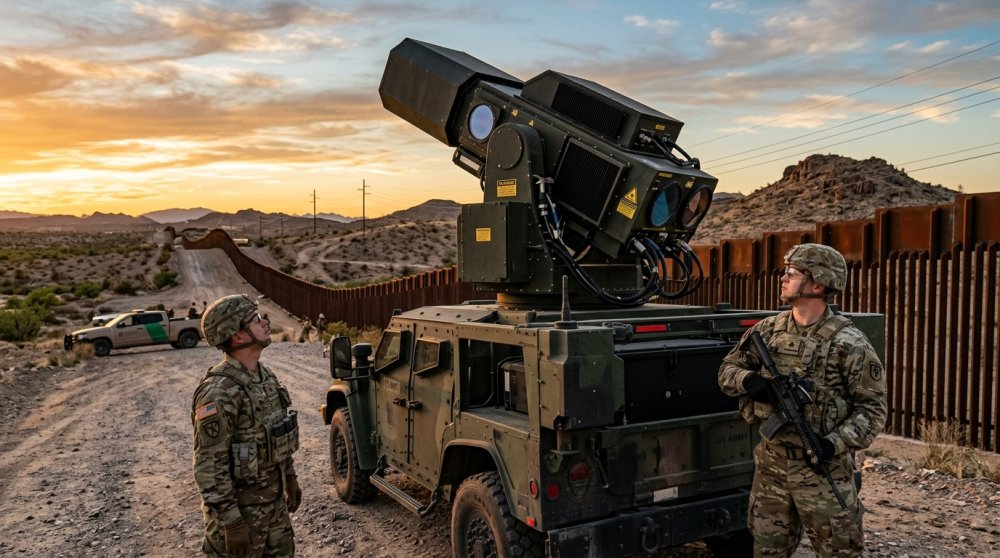
Military officials confirmed the use of directed energy weapons—essentially high-powered lasers capable of disabling or destroying unmanned aerial vehicles in mid-flight. These systems represent some of the most advanced counter-drone technology available, designed to protect critical infrastructure and military positions from hostile surveillance.
Counter Drone Technology📡#JTF_SB personnel used the #Army Multipurpose High Energy Laser (AMP-HEL) system to engage and defeat three hostile UAS.
📰Read more: https://t.co/l8Ccuq91Zu@usnortherncmd @DeptofWar @SecWar@SeanParnellASW #ArdentVanguard pic.twitter.com/PIq7COYxDi
— Joint Task Force Southern Border (@JointTFSB) August 28, 2026
The deployment comes as Mexican drug cartels have dramatically increased their use of drones for smuggling operations, surveillance of border patrol activities, and coordination of illegal crossing routes. Intelligence reports indicate cartels are flying dozens of drone missions daily, mapping patrol patterns and identifying vulnerabilities in border security.
A senior military source stated the policy clearly:
“We will not tolerate hostile surveillance.”
The laser systems offer significant advantages over traditional anti-aircraft measures. They operate silently, leave no physical projectiles that could cause collateral damage, and can engage multiple targets rapidly. Each shot costs only a few dollars in electricity compared to expensive missiles or munitions, making them ideal for high-volume drone threats.
Border Patrol agents have reported increasing frustration with cartel drone activity, which has grown from occasional sightings to daily occurrences in some sectors. The drones range from small consumer models carrying drug payloads to larger industrial units conducting sophisticated reconnaissance.
Security analysts note that cartel drone operations represent a clear threat to American sovereignty. By monitoring border security in real-time, cartels can time crossings, warn smugglers of patrol locations, and even drop contraband directly onto U.S. soil without ever crossing themselves.
The laser deployment represents a proactive stance on border security that prioritizes American safety over concerns about escalation. Critics have long argued that stronger defensive measures would provoke cartels, but national security experts counter that failing to defend the border only emboldens criminal organizations.
This technology has been tested in military theaters overseas but represents one of the first confirmed domestic deployments against cartel operations. The systems can track and engage targets at significant distances, creating an invisible protective dome over critical border areas.
Military planners indicate the laser systems are part of a broader technological upgrade to border security infrastructure. When combined with improved radar, thermal imaging, and rapid response teams, the lasers create a multi-layered defense that makes illegal activity significantly more difficult.
The cartel drone threat is not merely theoretical. Federal agents have documented cases of drones carrying drugs, conducting surveillance, and even attempting to interfere with law enforcement operations. In some instances, larger drones have carried payloads exceeding 100 pounds of narcotics.
Constitutional conservatives have long argued that defending America’s borders is the federal government’s most fundamental responsibility. The deployment of advanced military technology to counter foreign criminal operations represents exactly the kind of action citizens expect from their government—using American strength to protect American sovereignty.
Our freedoms depend on staying vigilant.