BREAKING: Defense Attorney Makes Stunning Move as Jury Deliberations Reach Critical Point
Liberty Check
- Massachusetts jury deadlock drags into sixth day as defense attorney accuses single holdout of refusing to follow the law
- Judge rejects fiery request to remove juror, maintaining strict separation from deliberations despite mounting tension
- High-profile case mirrors Karen Read trial pattern — intense media scrutiny, professional woman defendant, and polarized public opinion
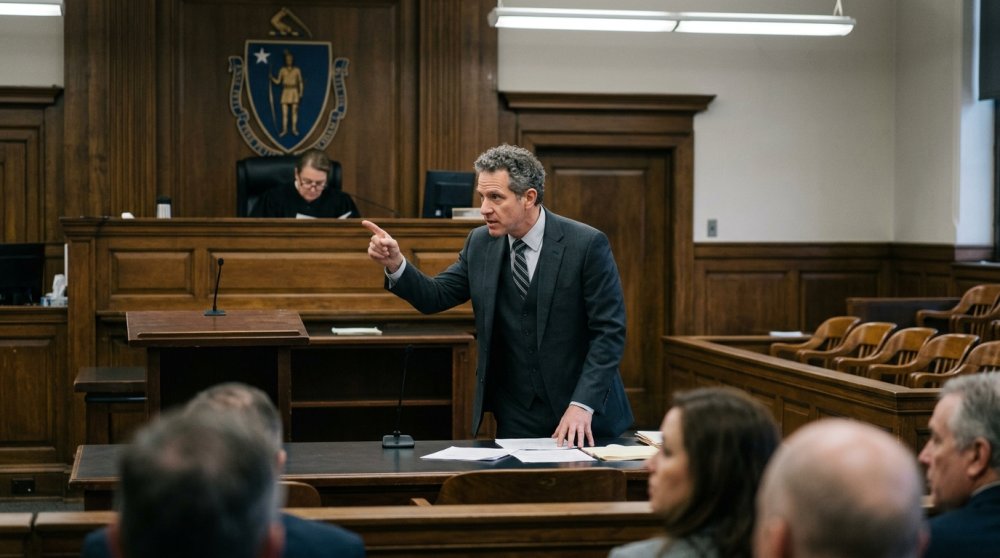
A Massachusetts murder trial has entered its sixth day of jury deliberations, with defense attorney Kevin Reddington making an explosive courtroom request after jurors twice indicated they cannot reach a unanimous verdict. The case has drawn comparisons to the Karen Read trial, another high-profile Massachusetts case that captivated national attention.
David Yannetti, who served on Karen Read’s defense team through both of her murder trials, offered rare insight into the pressure defense attorneys face during prolonged deliberations.
“It immediately brings back the stress and the pressure that comes from having somebody’s life in your hands and the very worst part of a trial, which is when the jury’s out. So I feel for Kevin now, as I feel any lawyer in that situation, but he appears to be confident.”
The defendant, Lindsay Clancy, faces three counts of murder in the deaths of her three children — Cora, 5, Dawson, 3, and Callan, 8 months old. Jurors must decide whether she is guilty of first- or second-degree murder, manslaughter, or not criminally responsible under her insanity defense.
Yannetti noted the unusual parallels between the Clancy case and the Read trial. Both involve professional women with no prior criminal records, both drew intense public support, and both generated overwhelming media attention.
“I think by all accounts, he did a wonderful job with this case, defending this woman in what is a horrific set of facts. I think Kevin has succeeded to a large degree already.”
Judge William Sullivan, presiding over the trial, received a new note from the jury Thursday afternoon and proceeded to explain the prosecution’s burden of proof beyond a reasonable doubt. He then sent jurors back to continue deliberating.
With jurors out of the courtroom, Reddington made his dramatic request to remove what he described as a single holdout juror. He argued that another juror had accused this individual of failing to follow the law.
Sullivan rejected the request outright.
Retired Massachusetts Judge Carol Erskine, who is not involved with the case, explained the judicial reasoning behind such decisions.
“Refusing to deliberate and refusing to agree are not the same thing. Judges are also required to be ‘extremely cautious’ not to interfere with deliberations.”
The court recessed shortly after 4 p.m., with jurors scheduled to return Friday morning for their seventh day of deliberations.
Yannetti described the excruciating wait that defense attorneys and their clients endure during jury deliberations.
“It’s torture. Trial attorneys like to be in control, but once the jurors are out, there’s nothing to do but watch and wait.”
“You’re all just sort of on the frying pan, being cooked.”
Read’s first trial ended with a deadlocked jury after five days in 2024. She was ultimately acquitted of all homicide-related charges after her second trial last year, when jurors deliberated for four days.
The Clancy case continues to draw intense public interest, with observers watching closely to see whether the jury can break its impasse or whether the case will result in a mistrial — potentially setting the stage for another lengthy legal battle.
The Constitution must be defended.