Crime
SHOCKING Precedent Exposed: Court Hands Down Disturbing Ruling on AI Child Abuse Images
Liberty Check
- Federal appeals court forced by outdated Supreme Court precedent to protect possession of AI-generated child exploitation material
- Judges warn that 25-year-old legal framework cannot keep pace with dangerous artificial intelligence advances
- Justice Clarence Thomas predicted this crisis decades ago — government may need new authority to protect children
A federal appeals court says decades-old Supreme Court precedent forced it to protect the in-home possession of AI-generated child sexual abuse material, as judges warned that rapidly advancing technology has complicated legal lines drawn nearly 25 years ago. The disturbing ruling highlights how liberal judicial activism from past courts now handcuffs prosecutors trying to protect America’s children.
The ruling exposes a widening gap between Supreme Court precedent and rapidly advancing artificial intelligence. The Seventh Circuit said it was bound by a 2002 Supreme Court decision that rejected restrictions on sexually explicit depictions of fictional children when no actual child was involved in their creation.
But two judges warned that modern AI can now generate images virtually indistinguishable from material depicting the abuse of real children. Technology has fundamentally changed since liberal justices drew these lines — yet the court’s hands remain tied.
“Indeed, in Free Speech Coalition, the Supreme Court addressed the scope of First Amendment protections for virtual CSAM, but that was nearly twenty-five years ago, and the image-generation technology available today was likely unimaginable back then,” Judge John Lee wrote.
“Given the relentless advancement in artificial intelligence models, we have some concerns about the lines these cases draw, but we are not free to redraw them ourselves.”
The Seventh Circuit affirmed a lower court’s dismissal of one of four charges against Steven Anderegg, who investigators said had hundreds of AI-generated sexually explicit images depicting children on devices seized from his Wisconsin home. While three charges remain, the possession charge was tossed on First Amendment grounds — a constitutional protection being stretched far beyond its original intent.
Anderegg was charged with producing and distributing the AI-generated material, transferring it to a minor under 16, and possessing it. A federal district court dismissed only the possession charge on First Amendment grounds, leaving the other three charges intact.
The Justice Department appealed that dismissal, arguing that the government should be permitted to prohibit possession of obscene virtual child sexual abuse material even when no actual child was involved in its creation. But the Seventh Circuit sided with the lower court, bound by precedent that no longer reflects technological reality.
The government generally cannot criminalize the private possession of obscene material inside someone’s home, but it can prohibit possession of child sexual abuse material involving real children because its creation exploits actual victims. This distinction made sense before artificial intelligence could create images indistinguishable from reality.
However, the Supreme Court complicated that distinction in 2002 when it struck down restrictions covering sexually explicit images of fictional children created without using actual minors. The justices reasoned that the government’s overriding interest in protecting children from exploitation did not apply in the same way when no real child was involved — a rationale that has aged poorly.
Hans von Spakovsky, a senior fellow with Advancing American Freedom, told Fox News Digital that the appeals court “had no choice but to uphold the dismissal under the First Amendment” because of the Supreme Court’s ruling. The Constitution is being weaponized against common-sense protections for children.
But von Spakovsky agreed with the concurrence by Lee and Judge Joshua Kolar, who warned the Supreme Court that the rapid growth of AI technology could require the justices to revisit precedent. The conservative legal expert recognizes what many Americans already know — the law is failing to keep pace with threats to our children.
“Unfortunately, AI-generated images are now virtually indistinguishable from the real thing and some of these images be created based on real child sexual abuse material,” von Spakovsky said.
“Technology may have overtaken and overwhelmed the reasoning used in those prior decisions.”
The Supreme Court previously ruled in Free Speech Coalition that taking images of real children and “morphing” them into sexually explicit poses would not be protected under its ruling on the possession of child sexual abuse material depicting fictional children because the practice involves the interests of real children. That exception may need to expand dramatically in the age of AI.
Justice Department lawyers have warned that the rise of AI-generated child sexual abuse material could bog down investigators trying to identify real victims, as increasingly realistic artificial images become harder to distinguish from depictions of actual abuse. Every hour spent analyzing fake images is an hour not spent rescuing real children from predators.
Judges Lee and Kolar raised another concern in their concurrence, citing research that found hundreds of child sexual abuse material images in a major dataset used to train image-generating AI. The judges suggested that could create a link between AI-generated material and the exploitation of real children, though they stressed that the government did not raise the issue in this case and that the record was insufficient to resolve it.
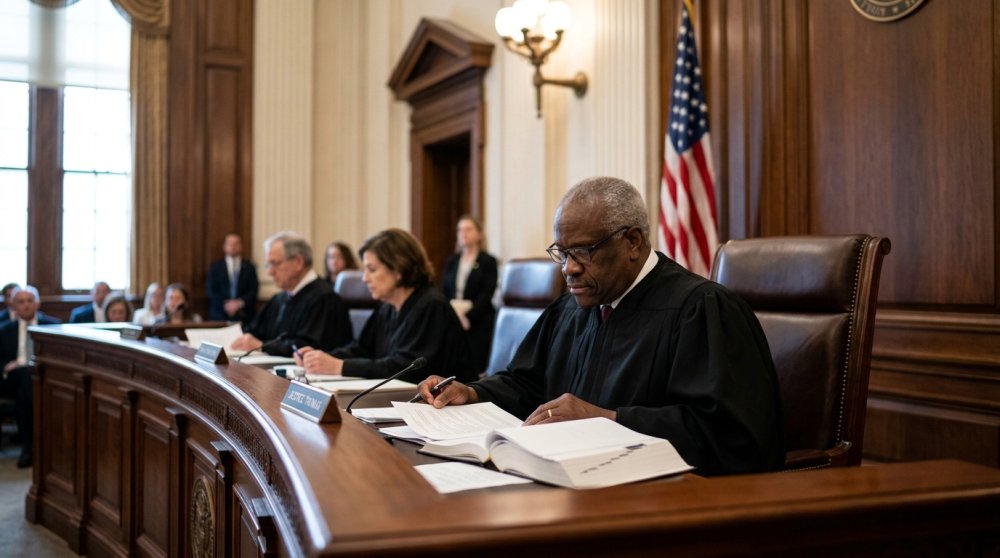
Justice Clarence Thomas anticipated the dilemma more than two decades ago, warning in the Supreme Court’s 2002 ruling that advancing technology could eventually make virtual depictions indistinguishable from child sexual abuse material involving real victims. Once again, conservative jurisprudence proves prophetic while liberal activism creates dangerous loopholes.
“If technological advances thwart prosecution of ‘unlawful speech,’ the Government may well have a compelling interest in barring or otherwise regulating some narrow category of ‘lawful speech'” to enforce laws against material produced through the abuse of real children, Thomas wrote.
Our freedoms depend on staying vigilant.