Science & Tech
Google’s SHOCKING Plan for Your Old Smartphone Will Leave You Stunned
Liberty Check
- Google partners with university researchers to transform discarded Pixel phones into functional data center components, reducing reliance on newly manufactured hardware
- University of California San Diego plans 2,000-phone computing cluster by Fall 2026, proving that retired smartphones retain significant processing capability
- Innovation challenges Big Tech’s wasteful upgrade cycle while offering cost-effective computing solutions for American students and researchers
That smartphone gathering dust in your drawer isn’t worthless after all. While most Americans see outdated technology destined for the landfill, Google and researchers at the University of California San Diego see untapped computing power that could revolutionize how we think about electronic waste and data processing.
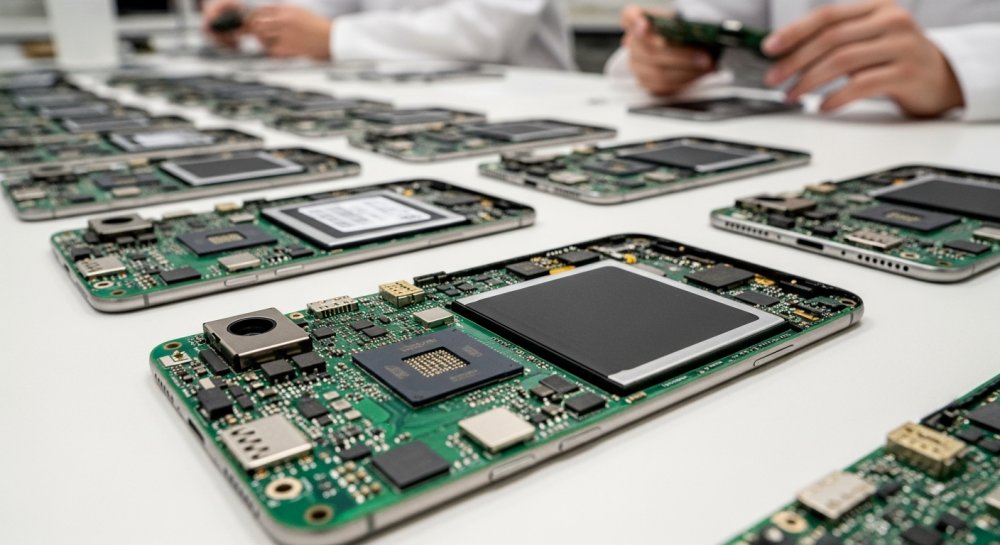
Their groundbreaking approach is called phone cluster computing. Instead of treating retired smartphones as garbage, researchers carefully extract the motherboard and redeploy it as part of a low-carbon computing system that rivals traditional server performance.
UC San Diego plans to launch a data center built from 2,000 Pixel smartphones in Fall 2026. The ambitious project aims to provide affordable cloud computing for students and researchers while dramatically reducing demand for newly manufactured server hardware that requires massive energy consumption to produce.
This means your next phone upgrade might contribute to American innovation rather than a Chinese landfill. The motherboard you thought was useless could end up powering the next generation of research and education.
How Retired Phones Become Powerful Servers
Phone cluster computing transforms retired smartphones into legitimate computing platforms through a meticulous process. Researchers strip each device down to its core motherboard, which houses the processor, memory and storage components that still retain significant value.
The teardown is critical because complete phones don’t belong in data centers. Batteries create serious safety hazards, while screens and cameras waste precious space without contributing computing power. The motherboard is the only component that offers genuine technological value for cloud applications.
Once extracted, researchers install a general-purpose Linux operating system onto each board. While Android already runs on Linux foundations, it’s designed for consumer mobile applications rather than flexible cloud workloads that data centers require. After software installation, the phone boards are grouped into coordinated clusters where multiple small boards function together like a collection of miniature servers.
The Environmental Case Against Big Tech Waste
The artificial intelligence boom has created an insatiable appetite for computing power. Data centers demand more chips, more electricity and more cooling systems while billions of functional phones fall out of use worldwide simply because consumers chase the latest model.
This Google-backed project challenges that wasteful paradigm by demonstrating that useful computing can come from hardware already manufactured and paid for. The focus centers on embodied carbon, meaning emissions created before a device ever powers on. Mining rare earth minerals, manufacturing components and international shipping all contribute to that substantial carbon footprint.
When a phone motherboard already exists, reusing it avoids significant environmental costs tied to manufacturing replacement hardware. Google acknowledges the motherboard accounts for approximately half of a phone’s embodied carbon, making it the most valuable component to salvage and redeploy.
Technical Performance Challenges Silicon Valley’s Assumptions
You can’t simply plug a pile of retired phones into a server rack and declare victory. The process requires careful disassembly, specialized software and sophisticated systems to manage numerous boards simultaneously. Google reports the project uses containerized applications managed by Kubernetes technology to coordinate work across many devices.
The phones are organized into self-managing clusters of approximately 25 to 50 boards. Each board functions as a compact Linux machine capable of handling tasks that would otherwise run on traditional cloud servers.
That doesn’t make one phone equivalent to one industrial server. Traditional servers contain many more processor cores, greater memory capacity and data center-grade hardware built for continuous operation. Phone boards have fewer resources and tighter operational limits. However, many cloud computing jobs don’t require massive machines—they need sufficient processing power to run efficiently without wasting resources.
The technical case is stronger than skeptics might expect. Google reports that single-threaded performance of modern smartphone performance cores can match or exceed the per-core performance of some contemporary multicore servers.
In one revealing comparison, a 2023 Pixel Fold was tested against an ASUS RS720A-E11 server using SPEC benchmarks. The Pixel Fold’s performance cores beat the baseline data center server core on numerous tests.
That sounds impressive, but important limitations remain. Smartphone boards have smaller memory limits and fewer cores than traditional servers. They also lack the management tools and hardware durability that industrial servers are engineered around. Success requires matching the right workloads to this innovative platform.
Real-World Testing Starts in American Classrooms
UC San Diego is launching with educational and research computing applications. That makes practical sense because many classroom tasks can run effectively on small cloud instances without requiring massive computational resources.
Google reports early experiments showed that a 20-phone cluster could support peak submission rates for a class of more than 75 students. The grading latency also performed better than the default AWS backend used in the comparison.
UC San Diego plans to deploy the 2,000-phone cluster to support computer science classes and research workloads. Google estimates the deployment could support approximately 100 classes simultaneously while providing roughly 50 server-equivalents worth of computing power at a fraction of traditional costs.
For universities struggling with budget constraints, that represents a significant advantage. Cloud computing expenses can escalate rapidly, especially when many students submit assignments simultaneously. If a reused phone cluster can handle substantial portions of that load, educational institutions can save taxpayer dollars while reducing demand for newly manufactured servers.
This also gives researchers valuable opportunities to test phone-based computing at meaningful scale. Small laboratory demonstrations can appear promising, but a 2,000-board deployment will reveal far more about reliability, maintenance requirements and day-to-day performance under real-world conditions.
Challenges Remain Before Widespread Adoption
Phone cluster computing sounds promising, but significant hurdles must be overcome. Your smartphone was engineered for daily personal use, not continuous operation inside a data center environment.
Data center servers are built to run for years with steady cooling, rapid repairs and constant monitoring. Phone motherboards come from devices designed for pockets and backpacks rather than industrial rack mounting. That fundamental difference raises legitimate concerns.
The boards could fail faster than expected under constant workloads. Cooling may become challenging once thousands of compact processors operate side by side in confined spaces. Labor costs present another obstacle—someone must safely remove batteries, screens and other components before boards can be reused.
Cost will ultimately determine success. If teardown, maintenance and replacement work become prohibitively expensive, this innovative concept may remain confined to research laboratories rather than achieving commercial viability.
Phone clusters also won’t replace the massive GPU systems powering advanced AI training applications. They make more sense for smaller cloud jobs, classroom tools and research tasks that fit within smartphone hardware limitations. That still represents plenty of useful work—not every cloud task requires the newest silicon.
America’s Growing Electronic Waste Problem
The world’s electronic waste problem is accelerating rapidly. The Global E-waste Monitor projects that electronic waste could climb to 82 million tonnes by 2030, while formal collection and recycling rates are expected to fall to just 20%.
Old phones represent a substantial portion of that problem because many never reach proper recycling programs. They sit forgotten in drawers, land in closets or get discarded with valuable components still intact. Even when a phone no longer feels useful to its owner, its processor, memory and storage may retain significant functional capacity.
Related second-life innovations are emerging across the technology sector, including old smartphones being converted into tiny data centers and repurposed electric vehicle batteries helping power AI infrastructure. The common theme is unmistakable—some hardware already in circulation retains useful work capacity rather than requiring immediate replacement.
What You Should Do With Your Old Phone
This research doesn’t mean you should immediately donate your old phone without proper preparation. Before recycling, donating, trading in or selling any device, you must protect your personal data.
Back up anything worth keeping, then sign out of all accounts and securely wipe the device using manufacturer-recommended procedures. Privacy must come first whenever you part with technology containing personal information.
Consider trade-in programs, certified refurbishers or reputable electronics recycling programs. If the phone still functions, buying refurbished devices can keep hardware in productive use longer while saving money.
The key is avoiding the trap of letting old devices sit forgotten indefinitely. A phone in a drawer helps no one—not you, not the environment, and not researchers who could potentially give it new purpose.
Rethinking the Upgrade Cycle
That old phone in your drawer may not be as obsolete as you assumed. Even if the battery shows age or the camera feels outdated by current standards, the processor inside retains genuine value for specific computing applications.
You probably won’t be mailing your old phone to a Google data center tomorrow. However, this project signals a significant shift in how Americans should think about retired technology. Instead of sending every old device straight to recycling or letting it collect dust indefinitely, companies, schools and researchers may discover smarter ways to reuse components that still function effectively.
There’s also a financial lesson here. If your current phone still runs well, you may not need to rush into an upgrade simply because manufacturers release newer models. A battery replacement, trade-in credit or refurbished option could save substantial money while keeping perfectly functional hardware in productive use longer.
That represents the real takeaway from this innovation. The phone you forgot about could still have productive work to do, whether powering university research, supporting classroom computing or simply serving another user’s needs through the refurbished market.
The Bottom Line
Google and UC San Diego are testing whether retired Pixel phone motherboards can become a low-carbon cloud computing platform. The project could give old smartphones legitimate second lives while reducing demand for newly manufactured servers—increasingly important as AI data centers keep demanding more computing power and electricity.
The first major test arrives in Fall 2026 with a 2,000-phone data center at UC San Diego. If successful, the cluster could support students and researchers at substantially lower cost than traditional cloud infrastructure while demonstrating that the constant upgrade cycle isn’t always necessary.
However, this concept must still prove it can handle the grinding demands of daily use. Reliability, cooling systems, teardown labor and maintenance costs will determine whether phone cluster computing can grow beyond research applications into mainstream deployment.
The most relatable aspect sits in your junk drawer right now. That old phone may seem useless to you, but its processor could still be powerful enough to help run legitimate cloud computing jobs. Perhaps the future of American computing innovation starts with hardware we already own but forgot we had.
Americans deserve innovation that reduces waste while expanding opportunity.