Domestic Policy
NYC Creates Radical New Agency Aimed at Organizing Private Workers
Liberty Check
- Socialist mayor establishes controversial office designed to organize private sector workers across all five boroughs
- New agency will direct city resources toward union recruitment while claiming to address ‘worker exploitation’
- Critics warn taxpayer-funded office represents government overreach into free enterprise and employer-employee relations
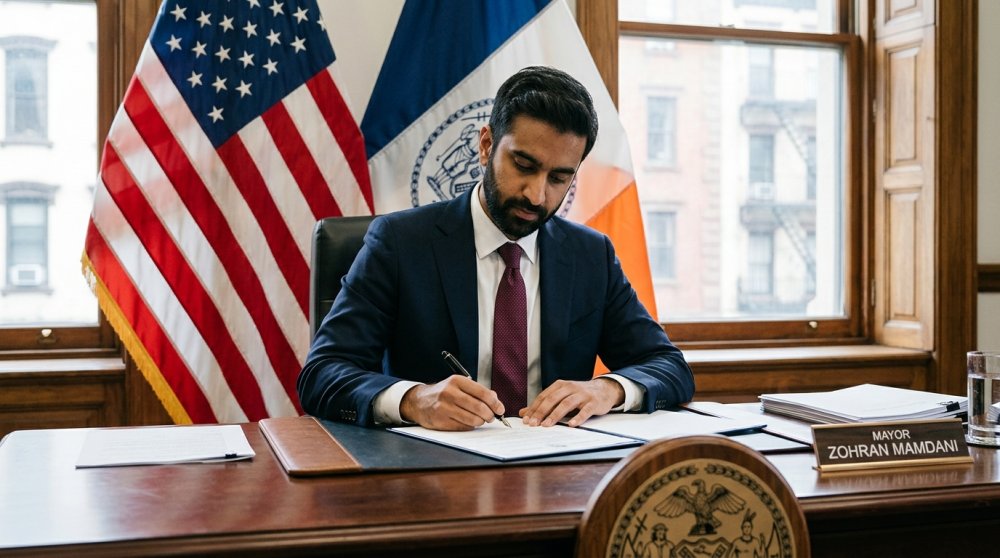
New York City Mayor Zohran Mamdani signed an executive order creating what he’s calling the “first-in-the-nation” Mayor’s Office of Worker Power (MOWP). The new municipal office represents an unprecedented expansion of city government into private sector labor relations.
The timing of the executive order—signed on Labor Day—appears calculated to maximize attention from union allies and progressive activists. Mamdani’s office touted the agency as a groundbreaking initiative aimed at organizing workers across the five boroughs.
In 1882, 10,000 workers marched up Broadway in the first-ever Labor Day parade. Led by democratic socialists and organized by New York’s unions, they rallied the movement that went on to win us weekends, safety standards, overtime pay, a minimum wage, and social security.
None…
— Mayor Zohran Kwame Mamdani (@NYCMayor) September 7, 2026
The Mayor’s Office of Worker Power will reportedly use city resources to facilitate union organizing efforts in private businesses throughout New York City. This raises serious questions about the appropriate role of municipal government in employer-employee relationships.
Conservative critics have voiced concerns that the new office amounts to taxpayer-funded union recruitment. By directing government resources toward labor organizing, the initiative blurs the line between public service and political activism.
The move comes as New York City continues to struggle with crime, homelessness, and fiscal challenges. Some wonder whether creating new bureaucratic offices should be the priority when basic city services remain strained.
Supporters of the initiative claim it will address “worker exploitation” and give employees more bargaining power. However, opponents argue that workers already have the legal right to organize without government interference or promotion.
The establishment of MOWP represents a significant shift in how local government approaches labor relations. Rather than maintaining neutrality, City Hall is now actively promoting unionization as a policy goal.
Questions remain about how the office will operate and what taxpayer dollars will fund its activities. The potential for conflicts of interest appears substantial when government takes sides in private sector negotiations.
Americans deserve better than taxpayer-funded political activism masquerading as public service.