Domestic Policy
EXPOSED: Texas Governor Makes Stunning Move Against Massive Surveillance Network
Liberty Check
- Gov. Greg Abbott orders state agencies to halt funding for AI-powered surveillance cameras tracking millions of vehicles across Texas
- Growing grassroots revolt forces Texas cities to cancel contracts with Flock Safety amid constitutional privacy concerns
- Federal lawmakers warn company has assembled ‘unprecedented national surveillance network’ with over 120,000 cameras nationwide
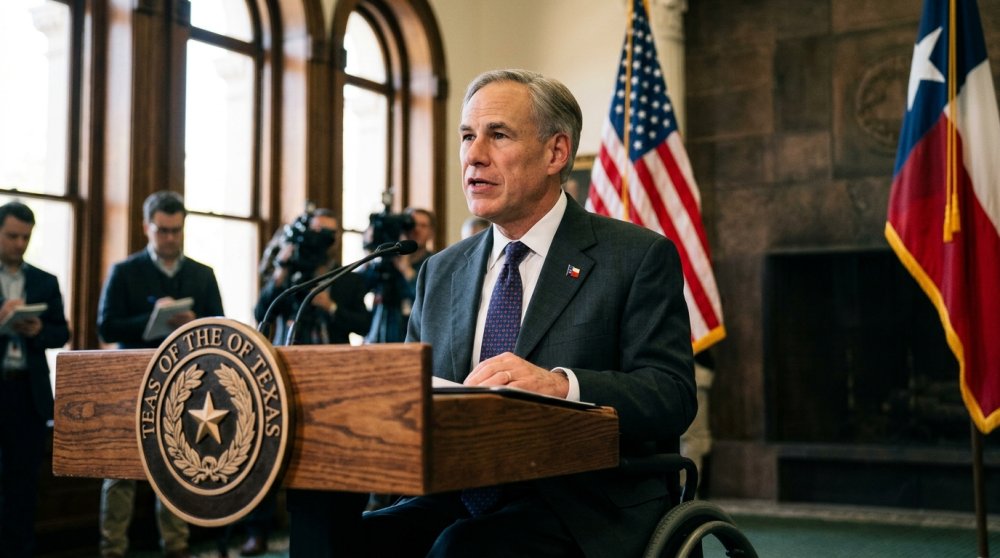
Texas Gov. Greg Abbott ordered state agencies to immediately pause funding for AI-powered Flock cameras Thursday, marking a significant victory for privacy advocates who have raised constitutional concerns about mass surveillance of American drivers.
Abbott’s office confirmed to Fox News Digital that the state is cutting off agency funding for the controversial camera systems, though most funding comes from federal sources.
“Almost all Flock cameras in Texas are used by cities, and those cities are increasingly canceling their contracts with Flock,” Abbott spokesperson Andrew Mahaleris said.
“To the extent that cities get any funding for those cameras, most of it comes from the federal government. To the extent any funding comes from Texas agencies, those agencies are clarifying that those funds cannot be used for Flock cameras,” Mahaleris continued.
Flock Safety operates one of the most extensive automated license plate reader (ALPR) networks in the nation. The AI-powered cameras photograph passing vehicles and record detailed identifying information including make, model, color, bumper stickers, and even vehicle dents.
Law enforcement agencies can then search these massive databases across participating camera networks—a capability that has triggered alarm bells among constitutional conservatives and civil libertarians alike.
While proponents claim the technology helps locate criminal suspects and stolen vehicles, opponents warn of serious Fourth Amendment violations and the dangerous potential for government overreach and data misuse.
Abbott’s decisive action follows a grassroots uprising across Texas communities demanding an end to what many view as unconstitutional mass surveillance.
The Pflugerville City Council voted unanimously this week to terminate its agreement with Flock, eliminating all 28 camera readers and disabling system access. Hood County Commissioners took even stronger action, voting to disconnect and physically cover their three cameras until they can be removed entirely.
Abbott acknowledged in a Friday radio interview that cities and counties have begun canceling Flock contracts under intense pressure from concerned residents who value their constitutional rights.
The Motor Vehicle Crime Prevention Authority—a Texas state agency—helped install over 3,000 Flock cameras since 2023, funded by a controversial $1 addition to vehicle insurance policies ostensibly meant to combat catalytic converter theft.
Significantly, there had been no legislative discussion about using these funds for surveillance cameras when the law passed in 2023.
Texas Agriculture Commissioner Sid Miller, a Republican, recently urged Abbott in a Houston Chronicle op-ed to halt new surveillance-technology purchases entirely.
Flock Safety spokesperson Paris Lewbel defended the company’s operations, claiming the technology serves as an “important public safety tool.”
“Flock’s technology is an important public safety tool for law enforcement agencies across Texas, helping officers solve serious crimes, find missing people, recover stolen vehicles, and support safer communities,” Lewbel said.
“We support thoughtful legislation and strong privacy, transparency, and accountability guardrails that ensure technology is used responsibly while preserving law enforcement’s ability to use effective tools to keep people safe,” Lewbel continued.
But the controversy extends far beyond the Lone Star State.
On Capitol Hill, Sen. Josh Hawley, R-Mo., is demanding comprehensive answers from Flock Safety about its sprawling surveillance apparatus.
“Flock has assembled an unprecedented national surveillance network,” Hawley told Fox News Digital.
“They boast more than 120,000 cameras across 49 states and more than 20 billion vehicle scans every month.”
Hawley said he is investigating the company to determine exactly who has access to data collected on hundreds of millions of American vehicles—a question that strikes at the heart of constitutional privacy protections.
The growing backlash represents a rare bipartisan consensus that unchecked surveillance technology threatens fundamental American liberties regardless of its stated crime-fighting benefits.
The Constitution must be defended.