Domestic Policy
SHOCKING: Radical Democrat’s Own Agency Now Being Weaponized Against Her Agenda
Liberty Check
- The Consumer Financial Protection Bureau — created by Elizabeth Warren — is now advancing President Trump’s deregulatory agenda under new leadership
- Acting Director Russell Vought is dismantling Obama-era consumer protections, reversing the agency’s original mission
- Warren’s signature achievement has become a weapon against progressive financial regulation
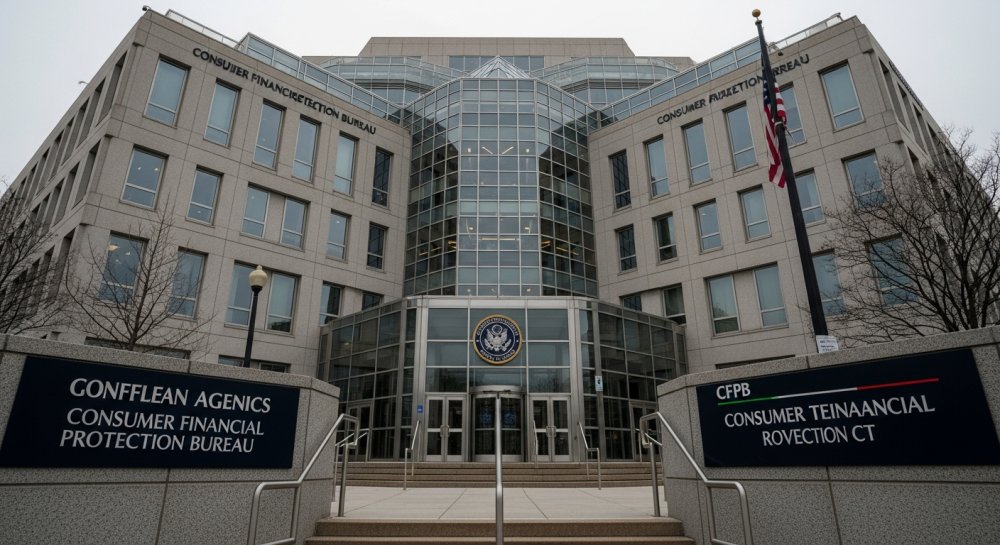
In one of the most ironic political reversals in recent memory, the federal agency championed by Senator Elizabeth Warren has been transformed into a vehicle for conservative deregulation. The Consumer Financial Protection Bureau (CFPB), once the crown jewel of progressive financial oversight, is now systematically dismantling the very protections it was designed to enforce.
Acting Director Russell Vought, appointed by President Trump, has initiated a sweeping overhaul of the agency’s mission and operations. Rather than pursuing the aggressive consumer protection mandate Warren envisioned when she helped create the bureau in 2010, the CFPB is now rolling back regulations and reducing oversight of financial institutions.
Delete CFPB. There are too many duplicative regulatory agencies.
— Elon Musk (@elonmusk) November 27, 2024
The Trump Administration is trying to destroy the CFPB and make it easier for YOU to get scammed.
Democrats are taking over the Senate floor and forcing votes on Trump’s attack. https://t.co/ZchodljFcb
— Elizabeth Warren (@SenWarren) May 13, 2026
The transformation represents a stunning defeat for Warren’s regulatory philosophy. The Massachusetts senator built her political career on the promise that government bureaucracy could protect ordinary Americans from predatory lending and financial abuse. Instead, the agency has become exactly what conservatives long predicted: another bloated federal bureaucracy ripe for political manipulation.
Vought has publicly stated his intention to streamline what he calls duplicative regulatory functions. In a recent memo to staff, he emphasized reducing the agency’s footprint and eliminating redundant consumer protection programs that overlap with existing state and federal oversight.
“Too many duplicative regulatory agencies create confusion and inefficiency,” Vought wrote in internal communications obtained by conservative analysts. “Our mission is to protect consumers through smart regulation, not bureaucratic excess.”
The acting director has already moved to suspend several enforcement actions against major banks and credit card companies, citing concerns about regulatory overreach. Multiple investigations into overdraft fees, credit reporting practices, and payday lending operations have been quietly shelved or significantly scaled back.
Conservative policy experts view the CFPB’s transformation as vindication of long-held concerns about the dangers of unchecked regulatory agencies. When Warren first proposed the bureau in 2007, critics warned that creating a powerful federal agency with minimal congressional oversight would inevitably lead to political weaponization — regardless of which party controlled the White House.
Those warnings proved prescient. The CFPB’s unusual structure, which shields it from traditional appropriations oversight and gives its director broad unilateral authority, makes it uniquely vulnerable to ideological capture. What Warren designed as a progressive bulwark against corporate greed has become a tool for conservative deregulation.
Financial industry representatives have welcomed the change in leadership and direction. Banking trade associations have praised Vought’s measured approach and commitment to reducing what they characterize as punitive enforcement practices under previous Democratic leadership.
However, the reversal has sent shockwaves through progressive circles. Consumer advocacy groups that championed the CFPB’s creation now watch helplessly as their flagship regulatory achievement is systematically dismantled from within. The agency that was supposed to be immune from political interference has proven anything but.
Warren herself has remained largely silent about the dramatic transformation of her signature policy achievement. The senator’s office declined multiple requests for comment about the CFPB’s new direction under Trump administration leadership.
The situation illustrates a fundamental problem with expansive federal bureaucracy: agencies designed to serve one political agenda can be rapidly retooled to advance the opposite agenda when power changes hands. Rather than creating permanent protections, Warren inadvertently built a powerful regulatory apparatus that now serves conservative principles of limited government interference in private markets.
Constitutional conservatives have long argued that the solution to regulatory uncertainty is not more bureaucracy, but clearer laws passed through proper legislative channels with robust congressional oversight. The CFPB’s dramatic ideological reversal validates that perspective.
As Vought continues reshaping the agency, the broader lesson becomes clear: unaccountable federal bureaucracies serve whoever controls them, not the American people. Warren’s grand experiment in progressive regulation has backfired spectacularly, becoming a cautionary tale about the dangers of concentrating unchecked power in executive agencies.
The Constitution must be defended.