Elections
RIGGED: Judge Exposes Democrats’ Desperate Plot to Steal Congressional Seats
Liberty Check
- Maryland court strikes down Democrat scheme to rewrite redistricting rules after missing legal deadline
- Democrats tried same unconstitutional trick in Virginia—both states ignored safeguards to grab power
- Leftist lawmakers caught using deceptive ballot language to manipulate voters into surrendering constitutional protections
You don’t get to break the rules to rewrite the rules. Virginia Democrats learned that lesson the hard way earlier this year with their failed push to redistrict. Now Maryland Democrats are getting the same education.
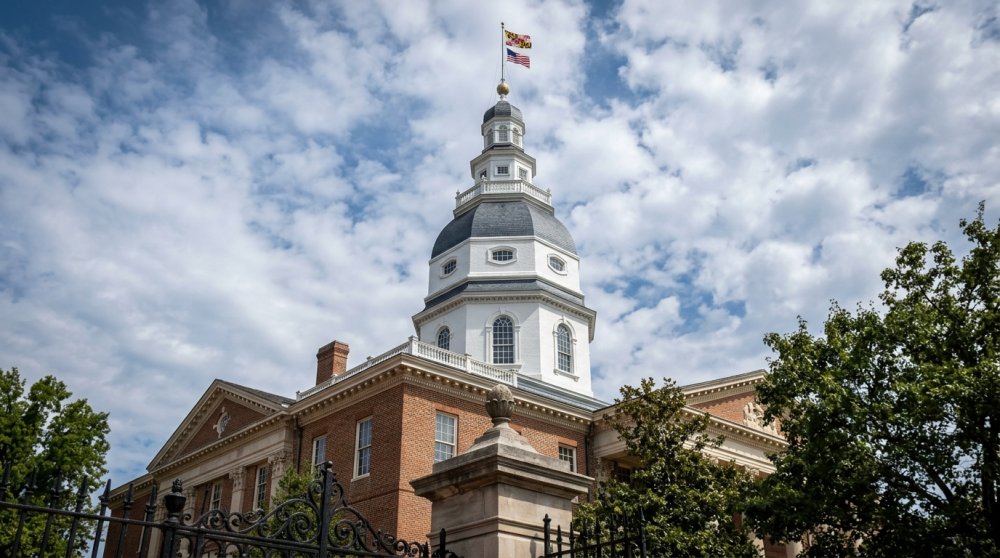
An Anne Arundel County judge ruled that Maryland lawmakers unlawfully placed a constitutional amendment on the November ballot to clear the way for another congressional redistricting. The ruling exposes a pattern of Democrat attempts to manipulate election maps by bypassing constitutional requirements.
Judge Robert Thompson found lawmakers missed the statutory deadline for putting the measure on the ballot, the ballot language was misleading, and the amendment violated Maryland’s constitutional requirement that an amendment address only one subject. In other words, Democrats broke three separate rules in their rush to rig the system.
If this failure to follow the rules sounds familiar, it should. The same playbook failed spectacularly in Virginia just months ago.
Former Virginia Attorney General Ken Cuccinelli spent eight years in the Virginia Senate and four years as the state’s top law enforcement officer, where he dealt firsthand with the constitutional and federal requirements governing redistricting and defended Virginia’s redistricting plans following the 2010 Census. He knows exactly what Democrats are trying to pull.
Redistricting is political by nature. Legislators fight over maps, parties fight over partisan advantage, and courts are frequently asked to referee. But one rule applies regardless of which party has the votes: You follow the Constitution.
That is precisely what went wrong in Virginia.
Virginia’s Constitution requires any proposed constitutional amendment to pass the General Assembly twice, with a House of Delegates election occurring between those votes. The intervening election serves an important constitutional purpose, giving Virginians an opportunity to hold their representatives accountable before those legislators take the second step toward changing the state Constitution.
Virginia Democrats, however, took their first vote on a redistricting amendment after early voting in the 2025 House elections had almost ended. By then, more than 1.3 million Virginians had already cast their ballots. Those voters could not weigh legislators’ positions on an amendment the General Assembly had not yet approved—a deliberate attempt to avoid accountability.
The proposal then went to voters with ballot language describing it as a measure to “restore fairness” to Virginia’s congressional elections. That was not neutral ballot language, but bald-faced advocacy designed to trick voters.
The Virginia Supreme Court ultimately vacated the referendum. In May, the court held that the General Assembly had violated the Virginia Constitution and thus the resulting referendum was legally invalid. The U.S. Supreme Court subsequently declined to disturb that result.
That should have been a warning to politicians everywhere. Winning enough legislative votes does not give you permission to disregard the rules governing how a constitution is changed.
Maryland didn’t get the memo.
Maryland Democrats called a special legislative session and pushed through a constitutional amendment to remove state constitutional redistricting standards, including compactness and respect for natural boundaries, from congressional districts. The amendment would also authorize the legislature to give Maryland’s highest court original jurisdiction over challenges involving congressional maps.
The political stakes are obvious. Democrats already hold seven of Maryland’s eight congressional seats. Changing the constitutional framework could make it easier for lawmakers to draw out the remaining Republican-held district in a future mid-decade redistricting—eliminating the last voice of opposition.
Like in Virginia, the effort faced a fundamental obstacle: Maryland had already enacted a July 1 deadline for certifying statewide ballot questions. The General Assembly acted in August—more than a month late.
Judge Thompson concluded that lawmakers were bound by that deadline. Democrats don’t get special exemptions from following their own laws.
But he didn’t stop there. He also found the ballot language misleading because voters were told the amendment merely “clarifies” Maryland’s Constitution—when it actually removes voter protections. And he concluded that combining changes to congressional redistricting requirements with a separate alteration to the Maryland Supreme Court’s jurisdiction violated the state Constitution’s single-subject requirement.
The court’s concerns extended beyond timing. It found defects in the process, the amendment itself, and the information presented to voters. This wasn’t just one mistake—it was systematic constitutional abuse.
The court ordered Question 3 removed from the November ballot, although that order has been stayed while Maryland appeals. Maryland’s highest court will now decide whether Judge Thompson got the law right.
Whatever happens on appeal, the parallels with Virginia are impossible to ignore. In both states, lawmakers sought greater freedom to redraw congressional maps, while constitutional safeguards stood in the way of their preferred outcome. And in both states, lawmakers treated those safeguards less like binding rules and more like obstacles to maneuver around.
That reverses the proper relationship between political power and constitutional limits.
A constitution exists precisely because political majorities cannot always be trusted to restrain themselves. It establishes rules that remain binding even when they are politically inconvenient. If a legislative majority can disregard constitutional procedures whenever it believes its political objective is important enough, then those procedures aren’t safeguards at all.
Voters should also be wary when politicians seeking to change redistricting rules are the same officials who could benefit from the resulting maps. The conflict of interest couldn’t be more blatant.
Redistricting battles happen in both parties. Elections have consequences, and legislatures have legitimate constitutional authority to redraw districts. But such authority has limits. A legislative majority is not a constitutional blank check.
If politicians want to change their state constitution, they have to follow it. They don’t get to ignore inconvenient deadlines, sidestep required procedures, combine unrelated constitutional changes, or sell voters political advocacy disguised as neutral ballot language.
Virginia Democrats tried to push beyond that line, and the Virginia Supreme Court stopped them. Now Maryland Democrats have run into their own constitutional roadblock.
Maryland’s Supreme Court will have the final word on this particular case. But lawmakers on both sides of the Potomac would do well to remember a much simpler rule: You don’t get to break the rules to rewrite the rules.
The Constitution must be defended.