Crime
Rome Takes DRASTIC Action After Violent Mob Swarms Historic Site
Liberty Check
- Rome declares security ‘red zone’ around Colosseum after 50-person mob attacked police and crime exploded
- Officials cite ‘groups of young people of non-EU origin’ as predominantly responsible for disorder and predatory crime wave
- New crackdown allows authorities to remove violent offenders and reclaim public spaces from criminal elements threatening tourists and residents
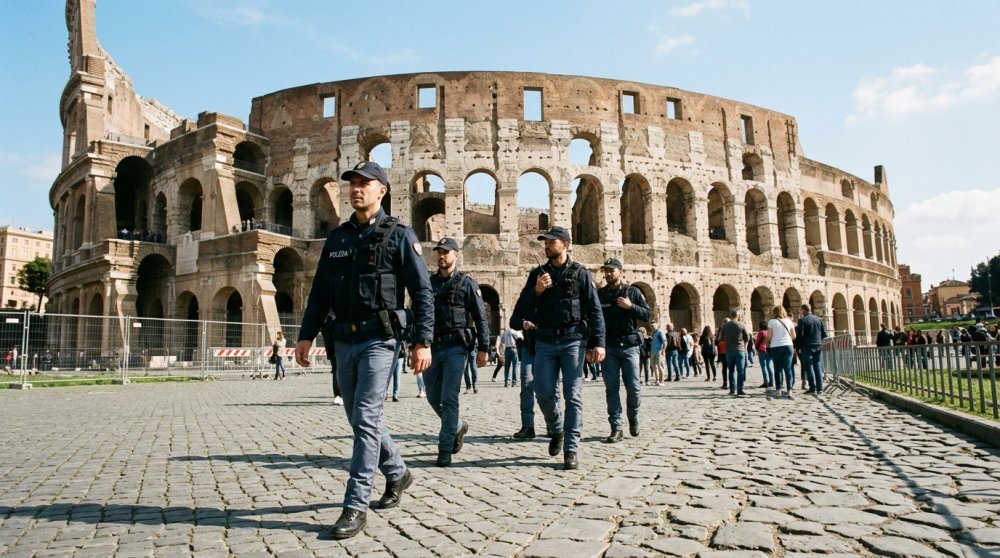
Rome has launched an aggressive security crackdown around one of the world’s most iconic landmarks after violent crime, drug trafficking, and a shocking confrontation involving approximately 50 individuals turned the historic Colosseum area into a danger zone. The emergency measure represents a bold stand against the chaos that has plagued the ancient site.
The newly designated “enhanced-control zone” encompasses the Colosseum, Imperial Forums, and Colle Oppio, granting authorities expanded power to remove individuals whose violent, threatening, or persistently disruptive behavior creates serious public safety risks, according to Rome Prefect Lamberto Giannini’s six-page emergency order.
The measure took effect August 24 and will remain active for four months, running through Christmas Eve.
Officials acknowledged the area has suffered a “resurgence of disorder” that was “predominantly attributable to groups of young people of non-EU origin,” the order states. The document detailed predatory crimes, mass brawls, and coordinated fireworks attacks near the ancient amphitheater—explosives authorities believe were deliberately set off to distract and confuse potential crime victims.
The situation reached a critical breaking point on July 1, when Rome Capital police officers responded to reports of fireworks being detonated near the Colosseum. What they encountered was far worse than anticipated.
A mob of approximately 50 non-EU nationals allegedly resisted responding officers, damaged police property, and surrounded local law enforcement in what officials described as a coordinated confrontation. Two officers sustained minor injuries during the unauthorized gathering in Piazza del Colosseo.
Authorities specifically identified Largo Gaetana Agnesi, a terrace overlooking the Colosseum and situated above the Colosseo subway station, as a regular gathering place for the groups at the center of the security crisis. The nearby Colle Oppio park was also flagged as a problem area because of individuals officials said may be engaged in conduct harmful to public safety and order.
The designated red zone stretches through some of the most recognizable areas of central Rome, including Piazza Venezia, Via dei Fori Imperiali, Piazza del Colosseo, the Arch of Constantine, and Piazza del Campidoglio.
Giannini issued the emergency order following a formal proposal from Rome’s police chief and extensive discussions by the Provincial Committee for Public Order and Security. Officials noted that the opening of the Metro C station serving the Colosseum has inadvertently contributed to security challenges by creating a direct connection between the historic center and neighborhoods in eastern Rome.
The stations draw massive numbers of commuters and tourists who could now be exposed to elevated criminal activity, officials warned.
Under the new order, authorities possess the power to remove people who engage in violent, threatening, or persistently disruptive behavior and who were reported during the previous five years for specific offenses. Those include intentional crimes against people or property, certain drug offenses, weapons violations, and crimes carrying hate-crime aggravating circumstances.
The crackdown represents part of a broader effort to protect residents and the millions of tourists flooding into the Italian capital. Officials described Rome as facing an unusually complex security situation due to major international events, a heightened geopolitical threat environment, and the continuing surge of visitors.
Authorities acknowledged that ordinary patrols, surveillance systems, fixed security posts, and joint “High Impact” operations had produced some results but failed to stop repeated criminal conduct or fully restore public spaces to law-abiding residents and visitors.
Officials also extended a separate security zone in Esquilino, covering streets around Rome’s main Termini train station and the Basilica of Santa Maria Maggiore. Demonstrations around Termini continue to require close monitoring, authorities said.
They also raised concerns about the increased number of visitors and pilgrims traveling to Santa Maria Maggiore, where Pope Francis is buried, warning that large crowds can become prime targets for predatory criminals.
An earlier enhanced-control designation covering the Valle Aurelia area was discontinued after authorities determined continuing special measures there was no longer useful.
Anyone who violates the order could face criminal charges under Italian law. Rome police have not yet responded to requests for additional information.
Law and order must be restored wherever chaos threatens innocent people.