Foreign Policy
BOMBSHELL: Pentagon’s Iran War Price Tag Exposed — Real Cost Could Be STAGGERING
Liberty Check
- Defense Secretary Pete Hegseth claims Iran conflict costs hit $37.5 billion, but defense analysts say the real number could dwarf that estimate
- Pentagon cost assessments raise serious questions about transparency as America considers military engagement in the Middle East
- Conservative voices demand full accounting of taxpayer dollars before any escalation with Tehran
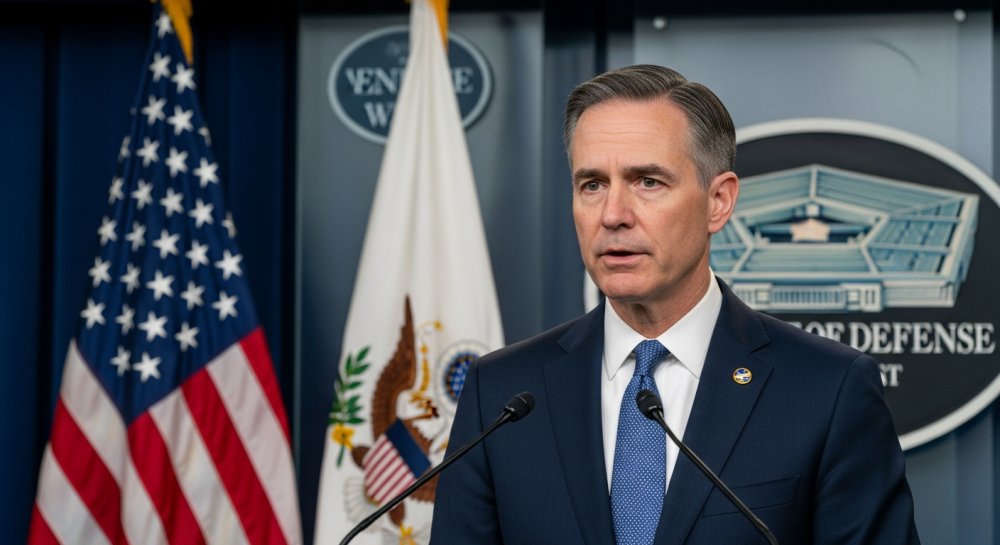
Defense Secretary Pete Hegseth has put the potential cost of a conflict with Iran at $37.5 billion, but independent defense analysts are sounding the alarm that the true price tag could soar far beyond that figure. The discrepancy has sparked intense debate about military spending transparency and whether American taxpayers are getting the full story.
The Pentagon’s cost estimate came as tensions with Iran continue to simmer following years of proxy conflicts and nuclear program concerns. But seasoned defense budget experts warn that Hegseth’s number may represent only a fraction of the actual financial burden American families would shoulder.
Defense Secretary Pete Hegseth confirms new estimate cost for the Iran war: $37.5 billion. pic.twitter.com/rlQMz6p2jh
— CSPAN (@cspan) July 21, 2026
On July 16, U.S. forces successfully destroyed the Chah Bahar Shahid Kalantari Port surveillance tower, part of a maritime surveillance network along Iran’s Gulf of Oman coastline used for decades by the Islamic Revolutionary Guard Corps (IRGC) to track and target commercial… pic.twitter.com/CgBNvgOFf9
— U.S. Central Command (@CENTCOM) July 17, 2026
Last night, U.S. forces executed a large-scale precision strike on Kharg Island, Iran. The strike destroyed naval mine storage facilities, missile storage bunkers, and multiple other military sites. U.S. forces successfully struck more than 90 Iranian military targets on Kharg… pic.twitter.com/2X1glD4Flt
— U.S. Central Command (@CENTCOM) March 14, 2026
Yesterday, using multiple one-way attack surface drones, CENTCOM forces successfully struck a submarine and ship maintenance facility in Iran. Three Corsair unmanned surface vessels hit the port at Bandar Abbas Naval Base, marking the first time American forces have employed sea… pic.twitter.com/bOM2kmgRxz
— U.S. Central Command (@CENTCOM) July 13, 2026
Multiple analysts who specialize in military expenditures have challenged the $37.5 billion figure, arguing that historical precedent shows initial Pentagon estimates routinely undercount the true costs of military operations. The Iraq and Afghanistan wars, initially projected to cost far less than their eventual multi-trillion dollar price tags, serve as stark reminders of how quickly military budgets can spiral.
Critics point out that Hegseth’s estimate may exclude critical categories like long-term veteran care, equipment replacement cycles, and the broader economic impacts of sustained military operations. These “hidden costs” have historically dwarfed the upfront operational expenses cited by defense officials.
The timing of this revelation is particularly significant as Congress debates defense appropriations and the American public grows increasingly skeptical of endless foreign entanglements. Fiscal conservatives in particular have demanded greater accountability and precision in military spending projections.
Defense industry insiders suggest the real costs could include not just direct combat operations but also the massive logistical infrastructure required to sustain forces in the Middle East, advanced munitions that can run into the millions per unit, and the diplomatic fallout that often requires costly stabilization efforts.
Some military budget analysts have suggested the actual costs could exceed $100 billion or more when all factors are considered, a number that would represent a massive burden on American taxpayers already struggling with inflation and economic uncertainty.
The debate over Iran war costs comes as the Pentagon faces scrutiny over failed audits and questions about how effectively it manages the massive defense budget that already exceeds $800 billion annually. Conservatives have long argued that defense spending must be robust but also accountable to the American people who fund it.
Hegseth, a combat veteran who has been vocal about his support for a strong national defense, has yet to respond to the analysts’ challenges to his cost projections. The silence has only fueled concerns among budget hawks that the true financial picture remains obscured.
As America weighs its strategic options in the Middle East, the question of cost transparency has become central to the broader debate about military engagement. The Constitution vests Congress with the power of the purse, making accurate cost projections not just a fiscal matter but a constitutional one.
Americans deserve better than fuzzy math when it comes to the price of war.