Foreign Policy
Smithsonian Affiliate Puts America on Trial While Minimizing 9/11 Victims
Liberty Check
- A Smithsonian-affiliated museum in Dearborn, Michigan, has spent two decades focusing its 9/11 exhibits on alleged U.S. discrimination while giving minimal attention to the nearly 3,000 Americans murdered that day
- The museum has received hundreds of thousands in taxpayer dollars through federal grants while hosting programming that criticizes law enforcement and frames Hamas terrorism as “liberation”
- Conservative lawmakers are demanding accountability as the Smithsonian faces mounting scrutiny for allowing political activism to replace objective history
Nearly 25 years after Islamic terrorists murdered 2,977 Americans on September 11, 2001, a taxpayer-funded museum in Michigan is more interested in putting the U.S. government on trial than honoring the victims.
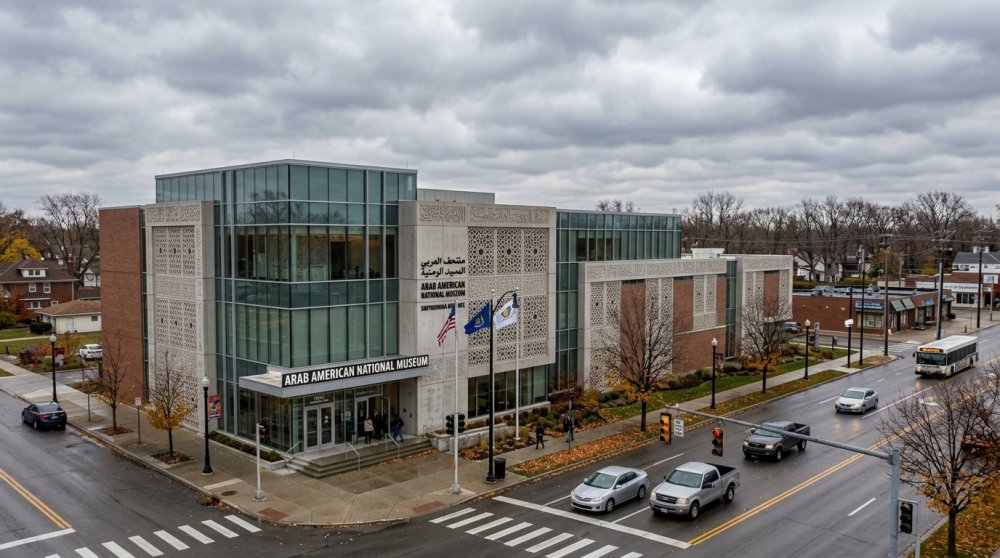
The Arab American National Museum in Dearborn has built its 9/11 programming around a narrative of American discrimination and government overreach. Meanwhile, the nearly 3,000 souls lost that day receive little more than passing mention.
The museum’s permanent exhibit argues that Arab Americans “suffered two-fold as a result of the tragic events of September 11th” — both from the attacks themselves and from what it describes as unfair treatment by the U.S. government afterward. Since its founding in 2005, the museum has repeatedly hosted programs examining what it characterizes as discriminatory consequences of America’s response to the deadliest terrorist attack in our nation’s history.
One placard criticizes the government’s post-9/11 detention of immigrants investigated for possible terrorist links, noting that “virtually none were charged” in connection with terrorism.
“The Arab American community suffered two-fold as a result of the tragic events of September 11th. As with all Americans, they suffered the horror and grief. However, Arab Americans were unfairly held responsible, yet not a single Arab American was found guilty of any connection to September 11th,” it reads.
On September 11, 2001, 19 al-Qaeda terrorists hijacked four passenger planes, crashing two into the World Trade Center and one into the Pentagon. Passengers and crew fought back aboard United Flight 93, prompting the hijackers to crash the plane in Pennsylvania.
The museum also argues that Arabs faced harsher immigration enforcement after the attacks, claiming some were “deported for minor visa violations or petty offenses which previously would have been overlooked.”
In the 11 months after the attacks, immigration authorities detained 762 noncitizens on immigration charges in connection with the FBI’s terrorism investigation. But context matters: President George W. Bush publicly urged Americans not to blame Muslims for the attacks, and polling showed attitudes toward Muslim Americans actually improved in the immediate aftermath. The share of Americans viewing Muslim Americans favorably rose from 45% in March 2001 to 59% in November, according to Pew Research Center.
Beyond its permanent exhibit, the museum has weaponized the 9/11 anniversary itself. It holds an annual “solidarity” town hall — but the online description doesn’t mention the deaths connected to the attacks. Instead, it “offers a safe space for communities to reflect and engage in dialogue about the harmful prejudices that Arab and Muslim (and anyone perceived to be Arab or Muslim) individuals face on both an individual and systemic level.”
A 2018 town hall examined “how communities of color have been targeted through the frame of national security and profiled as violent threats.”
A year later, the museum’s annual town hall — which received support from the National Endowment for the Arts — criticized how “institutions and communities of color have been infiltrated” by law enforcement and how leaders have been “targeted” following 9/11.
Here’s the kicker: American taxpayers have been footing the bill. The museum has received well over half a million dollars in funding from the National Endowment for the Humanities over its lifetime. It also benefited from a $385,000 grant from the Department of Housing and Urban Development in 2013, another half million dollars from HUD between 2017 and 2019, and at least $50,000 from the State Department between 2016 and 2017.
The museum is also an affiliate of the Smithsonian Institution, which has been under intense fire from conservative lawmakers in recent months for allowing political bias to influence its presentation of American history.
The museum’s activism extends far beyond 9/11. On September 10 — the eve of the 25th anniversary of the attacks — the museum is scheduled to host a screening of “Seeds for Liberation,” a film that portrays Hamas’ October 7 terrorist attack as part of a decades-long Palestinian “struggle” and places it within a broader history of “anti-imperialist and decolonial movements.”
During a recent visit, a section of the museum was dedicated to art criticizing Israel’s alleged “occupation” of Palestinian land. One piece accused the Israeli government of perpetuating “apartheid.” The art installation broadly accuses Israel of targeting civilians, denying basic necessities to Palestinians and unjustly occupying land.
One placard accompanying a sculpture states that Israel has killed more than 2,000 Palestinian children since September 29, 2000, citing If Americans Knew (IAK) — a controversial organization that some pro-Palestinian groups have distanced themselves from over allegations of antisemitism and ties to white supremacists. IAK operates a news site that has published articles rejecting the designation of Hamas as a terrorist organization.
Another placard quotes Defense of Children International Palestine, which the Israeli government designated as a terrorist organization in 2021.
The museum gift shop sells Palestinian-themed merchandise, including map-shaped magnets and key chains, coloring books promising to help children “explore Palestinian heritage,” and keffiyehs.
Dearborn, where about 54.5% of residents are of Middle Eastern or North African descent, is a key political center in Michigan ahead of one of the country’s most competitive Senate races this year. Socialist-aligned Abdul El-Sayed, who is running for the Senate, drew strong support from the city earlier this month.
Smithsonian affiliates are independently operated museums that maintain formal partnerships with the Smithsonian, providing them with access to artifact loans, educational resources and consultations from institutional experts.
In recent months, the Smithsonian has faced mounting pressure from Republican lawmakers and President Trump over allegations that its museums advance left-of-center ideological causes through their exhibits. Officials have threatened funding cuts if the institution does not root out what the administration characterizes as anti-American bias.
The Arab American National Museum, Smithsonian, National Endowment for the Arts and National Endowment for the Humanities did not respond to requests for comment.
Americans deserve better than having their tax dollars fund institutions that dishonor the victims of terrorism.