Foreign Policy
Russian Document Exposes Deepening Moscow-Tehran Alliance
Liberty Check
- The document reveals how Russia and Iran are actively building an alternative financial system to evade U.S. sanctions, threatening American economic leverage.
- Cooperation spans nuclear energy, aviation manufacturing and energy projects, all coordinated at the highest levels of the Russian government including Putin family ties.
- These partnerships directly undermine U.S. sanctions policy and strengthen two regimes hostile to American interests and traditional Western values.
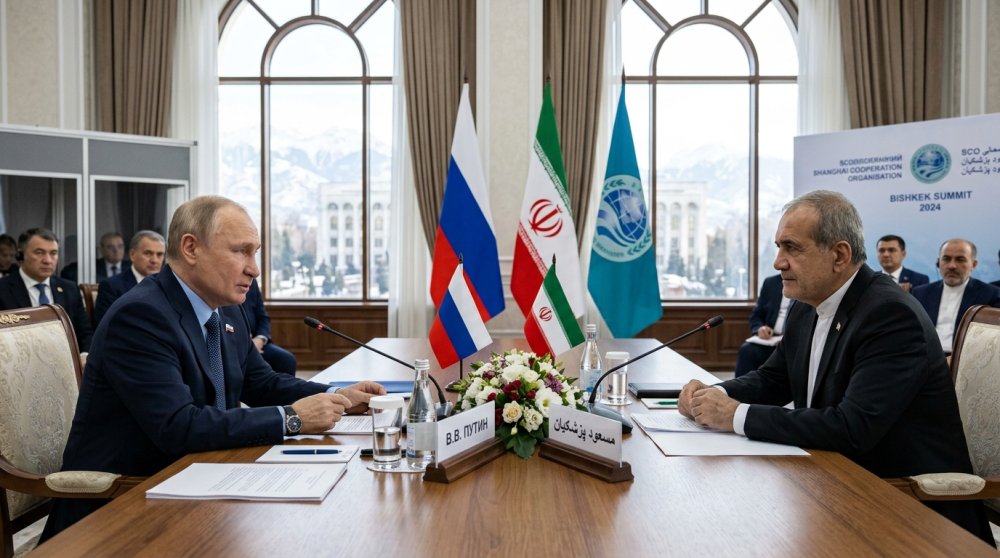
A nonpublic Russian government document obtained and reviewed by Fox News Digital reveals how Moscow sought to deepen its relationship with Iran far beyond conventional trade.
The 44-page Russian-language document, titled “Plan for Cooperation Between the Russian Federation and the Islamic Republic of Iran for 2024-2026,” is marked “For official use” and was approved on the Russian side on Sept. 2, 2024.
“The roadmap is not revelatory: people paying close attention to the relationship between Russia and Iran will see many collaborations between the two countries that have been public for years,” Korkiya said in written analysis provided to Fox News Digital.
“What is more revealing is the architecture of the relationship Moscow is trying to build,” she said, pointing to financial mechanisms, transportation routes, energy investment and aviation cooperation as different ways of reducing vulnerabilities created by sanctions and Western economic pressure.
“These are nonpublic high-level documents that illustrate the comprehensive cooperation between Russia and Iran,” a European intelligence source who reviewed the material told Fox News Digital.
“It is also strategic, sensitive and highly politicized, focusing on areas like nuclear programs, energy trade and financial transactions that aim to evade the U.S. sanctions,” the source said.
A U.S. official, responding on background to questions from Fox News Digital about the financial provisions, said U.S. sanctions have “severely isolated Russia and Iran from the international financial system,” adding that efforts by the two countries to develop alternative financial channels and other sanctions-evasion schemes were therefore “not surprising.”
The roadmap calls for Russia and Iran to coordinate through BRICS and other international institutions against “unilateral trade restrictions.”
“Especially interesting is that the roadmap also goes beyond practical sanctions workarounds and includes an effort to build an intellectual and diplomatic campaign against sanctions themselves,” she wrote, citing plans for expert communities, discussion platforms and an international forum focused on unilateral restrictions.
The plan assigns Russia’s state nuclear corporation Rosatom continued responsibility at Iran’s Bushehr nuclear power plant.
On Sept. 2, 2026, Rosatom said Russian specialists had begun returning to Bushehr, that Unit 1 was preparing for scheduled maintenance and partial fuel replacement, and that nuclear fuel had already been delivered to the site.
The roadmap also identifies specific Iranian oil and gas fields where Moscow sought a role.
Interfax reported on Feb. 13, 2026 that Russian state-owned ZN-Vostok was developing Iran’s Shadegan oil field, while Iranian officials said Tehran hoped to expand Russian investment across additional oil and gas projects.
The roadmap calls for Russia to help establish production in Iran of individual parts and assemblies for Russian aircraft.
In February 2025, Rosaviatsiya’s chief said three Iranian companies had been approved to perform maintenance and airworthiness work on Russian-operated aircraft after an Aeroflot Airbus A330 underwent maintenance in Tehran.
The roadmap calls for work on a proposed railway built to Russia’s 1,520-millimeter track gauge, stretching from Iran’s border with Azerbaijan toward Iranian ports on the Persian Gulf.
Russia and Iran formally launched engineering surveys for the railway in May 2025, according to Russia’s Transport Ministry.
The official overseeing the Russian side of the relationship also has a direct connection to President Vladimir Putin’s extended family.
“It should be emphasized that on Russia’s part, the economic cooperation with Iran is coordinated and managed by a representative of Vladimir Putin’s extended family,” the source said.
Our freedoms depend on staying vigilant.