Entertainment
STUNNING Shift: How One Global Event Changed American Dinner Tables Forever
Liberty Check
- American families in the 1960s embraced both international cuisine and convenience foods, creating a unique blend that defined a generation’s dinner table.
- Julia Child’s groundbreaking 1963 television debut brought French cooking into American homes, proving traditional techniques could thrive alongside modern convenience.
- From Swiss fondue at the World’s Fair to homemade casseroles, the era demonstrated American innovation and adaptability in the kitchen.
The 1960s marked a revolutionary shift in American cuisine as international dishes gained popularity while the processed and convenience foods of the 1950s remained staples on dinner tables across the nation. This was an era when American ingenuity met global flavors, creating a unique culinary landscape that baby boomers still remember fondly today.
C. A. Swanson & Sons introduced the frozen TV dinner in 1954, marketing it as an easy-to-prepare, fun-to-eat meal with a disposable tray that reduced cleanup time, according to the Smithsonian National Museum of American History. The portable TV dinner tapped into middle-class Americans’ excitement over television, allowing families to eat in front of their new sets — a testament to American innovation meeting family values.
Julia Child’s first television cooking show, “The French Chef,” debuted in 1963, and with it came a new approach to preparing foreign fare for middle-class home cooks. Her accessible style proved that traditional cooking techniques could thrive in American homes.
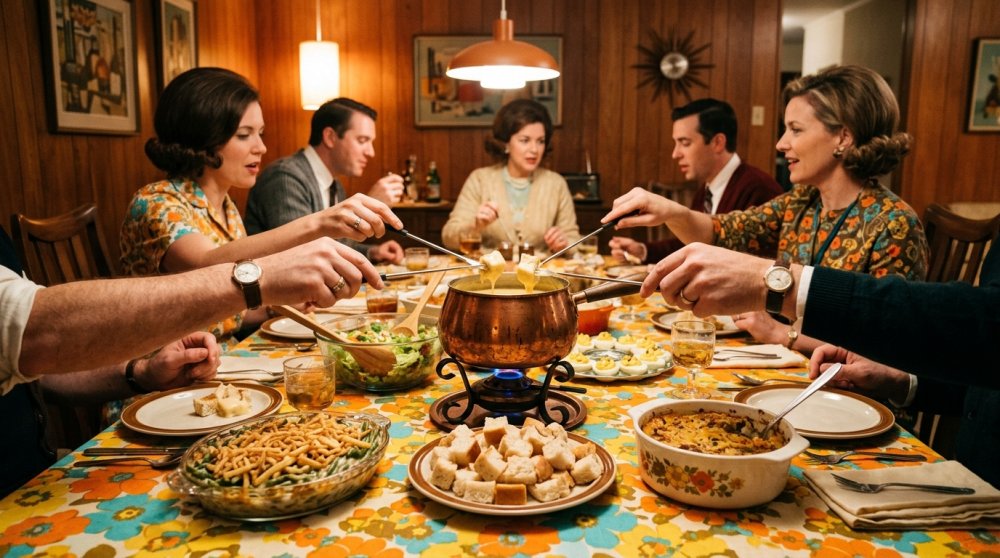
The Swiss tradition of fondue took America by storm in the 1960s and ’70s, thanks in part to the Swiss Pavilion serving Swiss cheese fondue at the 1964 New York World’s Fair. Fondue is derived from the French word fondre, which means “to melt.”
The dish involves melting cheese, wine and seasonings together in a pot and eating it communally with bread, meat and other items. Fondue sets became a fashionable centerpiece of entertaining during the ’60s and ’70s, bringing families and communities together around the dinner table.
As convenience cooking grew in popularity during the mid-century, casseroles incorporating canned and processed products fit the bill perfectly for busy American families. The green bean casserole was created by Campbell’s test kitchen employee Dorcas Reilly in 1955 and was originally called “Green Bean Bake,” according to the company’s website.
“To this day, the recipe calls for only six ingredients: canned or fresh green beans, Campbell’s Cream of Mushroom soup, soy sauce, black pepper, milk and French-fried onions,” the website says.
A recipe for tuna, noodle and mushroom soup casserole was included in the 1951 version of “The Joy of Cooking.” Chicken divan, a casserole combining chicken and broccoli in a creamy sauce and often topped with cheese and breadcrumbs, was another popular dish of the era that showcased American practicality.
The exact origins of Chicken Kiev are disputed, but it has connections to French culinary techniques and Eastern European cuisine. It is made by stuffing a chicken breast with cold, garlic-and-herb butter, breading the chicken and frying it. Frozen versions of this item are available in grocery stores today.
Lipton’s introduced its dehydrated onion soup in the early 1950s. By the middle of the decade, home cooks were combining it with sour cream to make what became known as California dip, later called French onion dip, a go-to snack item and party food.
The dip has evolved from the original, two-ingredient recipe. Modern iterations of it involve using Greek yogurt, whipped cottage cheese or cream cheese — proof that American creativity continues to build on traditional foundations.
Other retro food favorites that baby boomers may remember fondly include Swedish meatballs, Chicken à la king and grasshopper pie. Swedish meatballs are typically made with a meat mixture, breadcrumbs and egg and topped with gravy.
Chicken à la king uses chicken, vegetables and a cream sauce and is typically served over toast, rice or noodles. Grasshopper pie is a no-bake dessert that incorporates crème de menthe and crème de cacao in a cookie crust.
This era of American cuisine represented more than just food trends — it demonstrated how American families balanced tradition with innovation, convenience with quality, and embraced both homegrown ingenuity and international influences without losing their identity.
Americans deserve better.