Do You Support Trump’s Executive Order Allowing Cities to Institutionalize Homeless Individuals Against Their Will?
Do You Support Trump’s Executive Order Allowing Cities to Institutionalize Homeless Individuals Against Their Will?
Here’s The Scoop
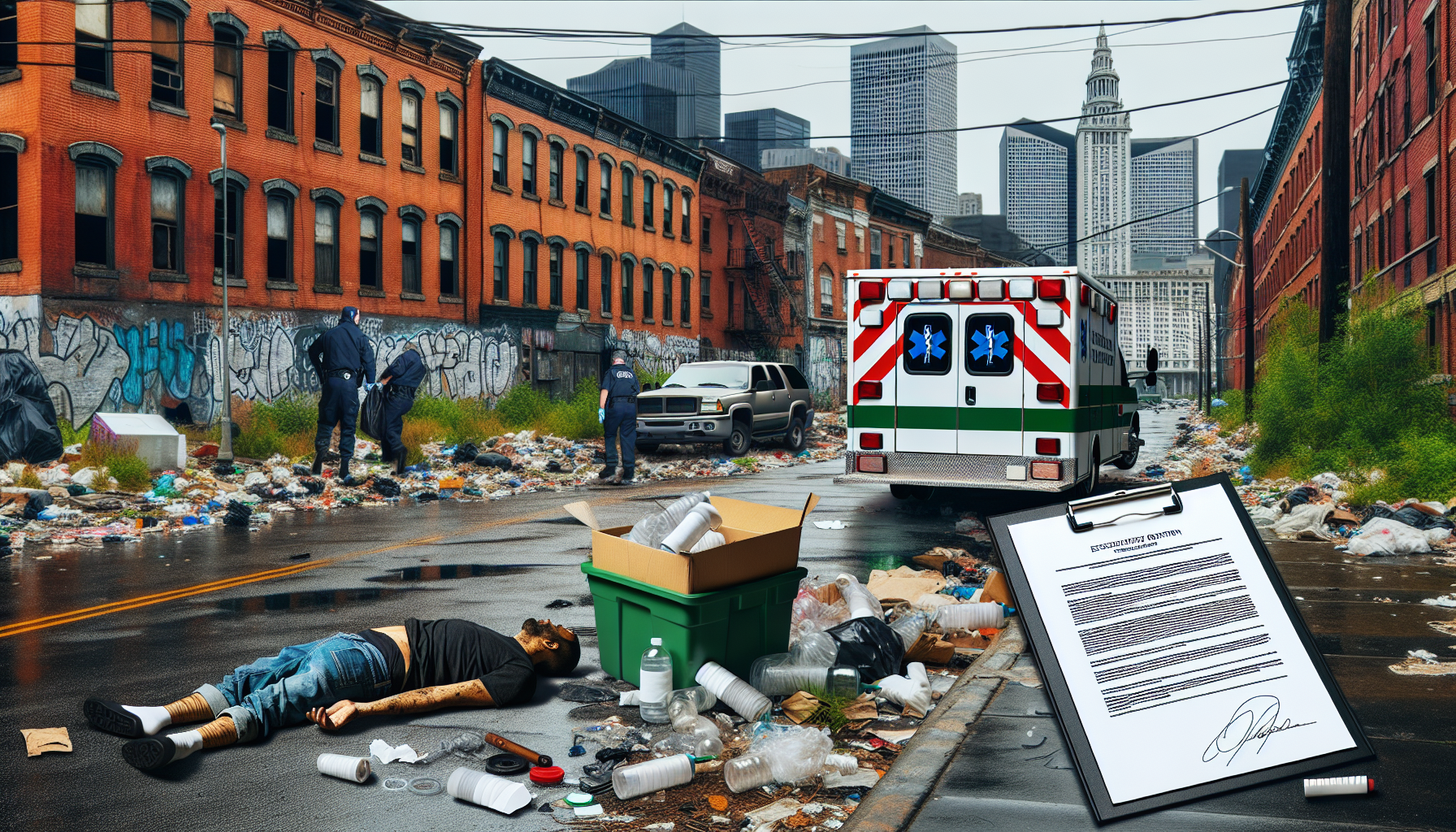
Two years ago, in Philadelphia’s Kensington neighborhood, an EMT’s frustration was palpable as he arrived to a scene of despair. I had called in the emergency for a man lying motionless on the street, surrounded by a sea of addiction and neglect. The EMT’s silent question seemed to ask, “What can we do amid this chaos?”
Last week, President Donald Trump provided a much-needed answer. His new executive order aims to reintroduce civil commitment, allowing authorities to institutionalize individuals who pose a danger to themselves or others, even against their will. This bold move has civil libertarians up in arms, claiming it infringes on due process and echoes a bygone era of questionable institutionalizations.
However, it’s crucial to confront the grim reality of our current situation. Across America, from the hidden corners of Manhattan to the notorious streets of San Francisco’s Tenderloin, the homeless crisis is spiraling out of control. Despite pouring billions into ineffective solutions, Democratic leaders like California’s Governor Gavin Newsom have failed to make a dent in the problem.
The Trump administration recognizes what many Democrats refuse to see: homelessness is not a monolith. While financial homelessness can be addressed with temporary housing and job support, the deeper issue lies with addiction and mental health. Allowing people to languish in tent cities, indulging in destructive habits, is not a solution—it’s a tragedy.
As I’ve walked through these urban wastelands, the question isn’t whether these individuals would be better off in institutions, but whether they’re already trapped in a cruel, open-air prison. Opponents of civil commitment argue for the freedom to live as they choose, but what kind of freedom is it to slowly self-destruct on the streets?
If it were your loved one caught in this cycle of despair, would you prefer they be left to their own devices, or would you want them placed in a safe environment where they can receive help? Critics point to past abuses of civil commitment, but we cannot let historical missteps prevent us from saving lives today.
Yes, there are risks of misuse, but the current situation is dire. People are dying on our streets, and we must act decisively to help them. That day in Kensington, the EMT managed to revive the man I had called about. His anger at losing his high underscored the need for intervention.
In this debate, there are two clear sides: one that seeks to save lives, even if it means making tough decisions, and one that leaves individuals to their own peril. President Trump has made the right choice, and if local governments follow suit, countless lives could be saved across America.
What do you think? Let us know by participating in our poll, or join the discussion in the comment section below!

Mike
July 30, 2025 at 6:21 am
Reagan dismantled the state mental hospitals, Trump reinstates them. Would people rather have the sick rummaging through trash for food or in a hospital getting help
Tim Kuehl
July 31, 2025 at 8:25 am
Reagan did not dismantle state mental hospitals. Other than for criminal behavior, the Supreme Court ruled people cannot be held in institutions without their consent. O’Connor v. Donaldson, 422 U.S. 563 (1975). That said, President Trump’s executive order may not stand even though it would probably alleviate much of the homeless problem.
Dave
July 30, 2025 at 7:25 am
Unfortunately the homeless situation has gotten out of control. While it’s difficult not to interfere with people’s lives we can’t just have people set up camp wherever they want. Some of these homeless people need help emotionally and mentally
Julie
July 30, 2025 at 11:05 am
Mentally ill people who either refuse to take meds to prevent psychosis or lose their meds are vulnerable in every sense of the word. Addiction Is a disease not a choice for some and alot use illegal drugs to stop the effects of mental illness. You cannot hold responsible a mentally ill person when in psychosis thinking they are going to be responsible after stabilizing in a hospital then released to homelessness only to end up back in the hospital, committing a crime that would not occur had they been in a safe monitored environment. I know because my son ended up dead in a motel alone and had left his meds in storage so he took an illegal drug and ended up deceased. Breaks my heart. Housing was not available . Police must be replaced with psychiatrists or psychologists who KNOW after the person has a serious mental illness to take to the hospital as they are NOT qualified to determine this.
MeMyselfAndIDontCare
July 30, 2025 at 6:44 pm
Addiction absolutely is NOT a “disease” – it is merely a weakness of character & a lack of willpower. It is 100% a “choice”. You have my sympathy for your loss, (I, too, have lost a son – to an actual disease,) but I have none for your son. He took an illegal drug because he wanted to. He knew what he wanted and where & how to get it. Don’t delude yourself into believing that he only took it because his meds were “in storage”. You cannot blame the drug-use on homelessness, either, rather the homelessness is more often the result of the drug-use. If you play chicken with trains long enough, eventually you won’t get out of the way in time and the train will hit you. Addicts just love playing chicken…
Jerry C.
July 30, 2025 at 6:18 pm
I support putting the mentally-ill who are dangerous in lock-down facilities, absolutely. I don’t, however, back “Executive Orders” that far exceed the legal scope of the instrument and the legal authority of the President. This is a complete waste of time and will end-up being a big waste of tax dollars as the DOJ tries to defend this unconstitutional action in the courts and the resulting loss will only serve to bring-on another Presidential temper-tantrum.