Education
Major University Launches SHOCKING AI Training Push—Healthcare Workers Told to Adapt or Fall Behind
Liberty Check
- Universities are now requiring healthcare workers to undergo artificial intelligence training programs as medical automation accelerates across America
- The push for mandatory AI education raises concerns about human oversight being replaced by machine decision-making in patient care
- Healthcare institutions claim workers must adapt quickly to new technology, but critics warn of a rushed transformation threatening traditional doctor-patient relationships
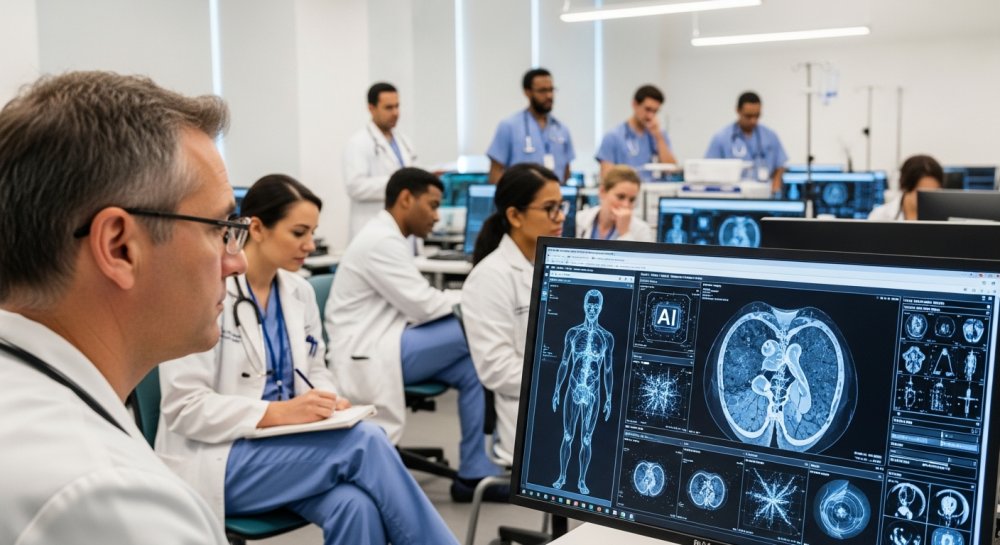
A major American university has announced comprehensive artificial intelligence training programs designed to bring healthcare workers “up to speed” with rapidly advancing technology that’s transforming the medical industry. The initiative represents a significant shift in how medical professionals will be expected to operate in the coming years.
Officials at the institution acknowledged the urgency behind the rollout, stating administrators “see a need for this” as AI systems become increasingly integrated into diagnostic procedures, treatment planning, and patient monitoring. The training programs will target doctors, nurses, and support staff who have traditionally relied on human judgment and experience.
The move comes as hospitals and medical centers nationwide rush to implement artificial intelligence tools, despite ongoing debates about the appropriate role of machine learning in life-and-death healthcare decisions. Conservative healthcare advocates have raised questions about whether the rapid adoption prioritizes efficiency over the personal care that has defined American medicine.
Healthcare workers themselves have expressed mixed reactions to the mandatory training requirements. While some recognize the potential benefits of AI assistance in reducing diagnostic errors, others worry about becoming overly dependent on algorithms that lack human intuition and the ability to consider patients’ unique circumstances.
The university’s program will cover machine learning basics, AI-assisted diagnostics, automated patient monitoring systems, and ethical considerations in algorithmic healthcare. Participants will be required to complete certification courses before interacting with AI-powered medical systems in clinical settings.
Industry observers note that the healthcare sector has lagged behind other industries in AI adoption, creating pressure for rapid catch-up that may not allow adequate time for thorough vetting of new technologies. The rush to modernize raises fundamental questions about maintaining human accountability in medical decision-making.
Critics of aggressive AI implementation in healthcare point to concerns about data privacy, algorithmic bias, and the potential for technology companies to gain unprecedented influence over medical practices. The financial incentives driving AI adoption may not always align with patients’ best interests or traditional medical ethics.
The training initiative also highlights broader workforce transformation as automation reshapes professional requirements across industries. Healthcare workers who fail to complete AI certification programs may find themselves at a competitive disadvantage as institutions prioritize technological proficiency alongside clinical skills.
Medical professionals have built careers on years of hands-on experience and patient interaction—knowledge that cannot be easily replicated by algorithms. The question remains whether AI training programs adequately prepare workers to maintain the human element of healthcare while incorporating new technological tools.
Americans deserve better.