Crime
Fugitive Mom’s Cartel Shield Collapses After 30-Year Hunt for Child’s Brutal Murder
Liberty Check
- Border security failures allowed a violent criminal with cartel ties to evade justice for decades.
- Child abuse prevention laws remain toothless without strict enforcement and parental accountability.
- International extradition delays expose how foreign legal loopholes shield American fugitives.
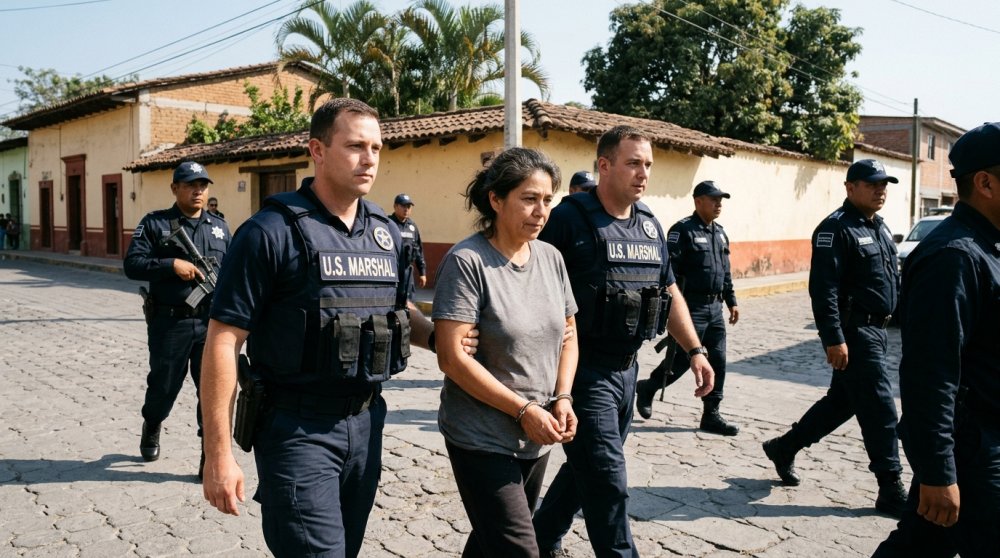
Nearly three decades after the horrific murder of her three-year-old daughter, a mother has been captured in Mexico on first-degree murder charges. Federal authorities say her deep ties to drug cartels helped her remain a fugitive for more than a dozen years.
Anna Marlene Somoza, now 60, was taken into custody by the U.S. Marshals Service after years of hiding in Mexico. Officials confirm her cartel connections allowed her to dodge law enforcement at every turn.
“The majority of reports come from the education system in our country, from teachers, counselors, schools,”
Somoza will now face extradition to the United States to answer for the murder of her daughter, Crystal Reyes. Court documents detail the extreme abuse the child endured before her death in 1997.
Reyes was confined to a dog kennel, bound hand and foot, gagged, and left alone for weeks. On January 30, 1997, she was suffocated with a towel taped to her face and sealed inside a cardboard box.
“In the past 20 years, many states have passed laws not only mandating that professionals report any suspected abuse, but…every adult over the age of 18 is considered a mandated reporter.”
Authorities identified the child’s remains in 2014 through DNA analysis after bone fragments were discovered years earlier by a hunter. Somoza’s boyfriend at the time, Avelino Tamala, was convicted of the murder in 2016 and is serving life in prison.
Somoza had a long criminal record tied to a major drug trafficking operation along the Arizona border in the 1980s and 1990s. After her own 1993 arrest for marijuana trafficking, she became a confidential informant and later entered an improper relationship with Tamala, a narcotics detective.
“She’d taken deliberate and extensive measures to evade detection by law enforcement while remaining at large.”
Despite her deportation in 2008, investigators from multiple agencies tracked her movements until her arrest in Xochitepec, Mexico, in October. Extradition proceedings are now underway, though the process could take months or even years if Somoza challenges the charges through Mexican legal appeals.
“These amparos are a big deal in Mexico. It hits the pause button, too. So a three-month extradition can turn into a two-year extradition.”
Our freedoms depend on staying vigilant.